

Views: 0 Author: Site Editor Publish Time: 2026-05-20 Origin: Site


Purchasing a fishing vessel represents a serious, high-stakes investment for any angler. Choose the wrong hull design or overlook hidden maintenance problems, and you can easily ruin your on-water experience. An incompatible boat transforms a relaxing weekend into a frustrating ordeal. Recently, we see a massive rise in the popularity of metal options over traditional fiberglass. Anglers love their rugged durability and accessible entry points. Yet, you must understand manufacturers do not build all these vessels for the same purpose. A shallow-water skiff performs terribly in heavy offshore chop.
This guide serves as your bottom-of-funnel decision framework. We will help you perfectly align hull specifications, specific water conditions, and critical inspection points. You will learn exactly what to look for and what to avoid. By the end, you can make a highly confident purchase.
Define your primary waterway first: Big open water requires a Deep-V hull, while shallow, stump-filled water favors a Mod-V or flat bottom.
Budget for the Total Cost of Ownership (TCO), factoring in trailer type, towing capacity, insurance, and electronic upgrades.
When evaluating used boats, prioritize the engine and transom health; the aluminum shell itself is secondary.
Look for benchmark specifications, such as a minimum 48-inch bottom width for two-person stability and .100-gauge aluminum for long-term durability.
Setting realistic expectations helps you validate your final choice. You must clearly understand both the advantages and the known adoption risks. Choosing the right Aluminum Fishing Boat requires an honest assessment of your angling habits.
Metal hulls eliminate the dreaded "gel-coat anxiety." Fiberglass boats scratch easily. A single rock strike can cause thousands of dollars in cosmetic damage. Metal completely changes your driving psychology. You can confidently navigate stumpy, rocky areas. You can push through flooded timber safely. The material simply dents upon heavy impact. You rarely face catastrophic structural failures from typical underwater hazards.
Lower initial hull costs leave ample room in your budget. You can redirect funds toward high-end electronics. Rigging these vessels remains exceptionally straightforward. Metal designs often feature open gunnels or accessible conduits. Running transducer wires takes minutes instead of hours. You save massive amounts of labor time. You can upgrade your fish finders or trolling motors seamlessly.
Every vessel type has inherent weaknesses. You must plan for these operational realities.
Wind Drift: Metal is exceptionally lightweight. It easily blows off course during breezy days. Precise boat control becomes difficult. Professional anglers mitigate this effectively. They add drift paddles to slow their drift rate. They also distribute up to six heavy marine batteries across the bow. This creates essential ballast.
Ride Comfort: You will notice distinct acoustic differences. Water slapping against metal echoes loudly. This "wave slap" noise can spook fish in ultra-shallow zones. Furthermore, high speeds often produce a rougher ride. You experience more vibration. You often endure a wetter ride compared to heavy fiberglass models.
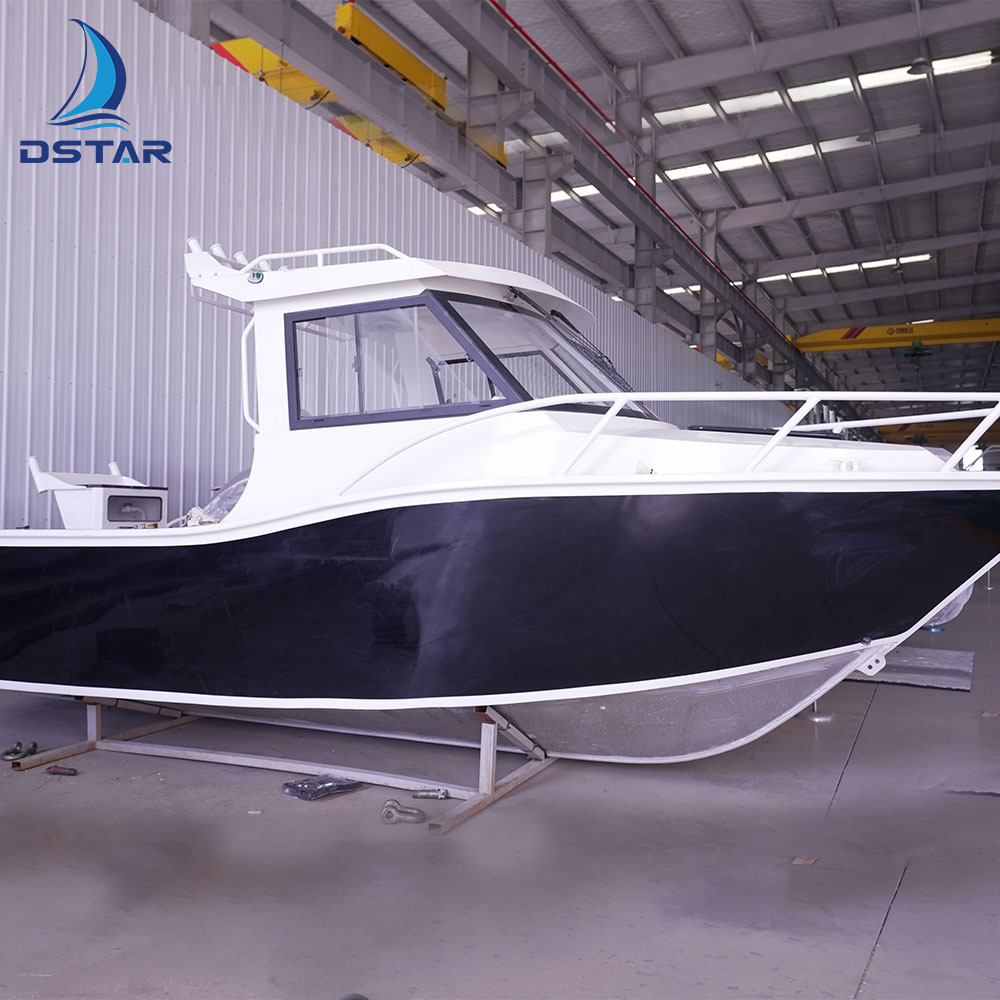
You cannot force a hull to perform outside its intended environment. You must align your solution category directly to your specific waterway. The shape of the bottom determines everything.
These hulls handle serious environments. Manufacturers build them for large lakes and coastal bays. They dominate the salmon and trout fishing markets.
Pros: The sharp front angle cuts through heavy chop smoothly. They absorb wave impact beautifully. They feature significantly higher sides. This provides incredible safety for children or guests onboard. They also deliver superior straight-line tracking in crosswinds.
Cons: The steep design requires much deeper drafts. You completely eliminate your extreme shallow-water access. You cannot launch them at primitive, shallow dirt ramps safely. They also weigh more, requiring larger tow vehicles.
These specialized shapes excel in hidden backwaters. They rule calm lakes, narrow weed lines, and shallow river systems. They cater heavily to the casting angler.
Pros: You gain incredible "turn on a dime" maneuverability. They feature incredibly shallow drafts. You can slide right over submerged sandbars. They maximize flat casting deck space. Two heavy anglers can stand on one side without tipping the vessel.
Cons: They deliver a truly punishing ride in rough water. The flat front slaps waves violently instead of slicing them. You face a much greater risk of taking on water over the bow. Heavy chop makes these hulls dangerous if driven aggressively.
Subjective feelings matter less than concrete numbers. You need hard metrics to evaluate different models properly. Use these exact specifications as your benchmark criteria.
The bottom width dictates your entire on-water experience. Never confuse the beam (top width) with the bottom width. The bottom width determines your standing stability.
| Bottom Width | Primary Application | Stability & Capacity Profile |
|---|---|---|
| 36-inch | Solo stealth operations | Ultra-lightweight. Highly prone to tipping if you lean over. Strictly for single riders. |
| 48-inch | The versatile industry standard | Balances mobility perfectly. Allows two people to stand and cast simultaneously safely. |
| 52 to 56+ inch | Heavy hauling and families | Maximum capacity. Perfect for hauling heavy duck blinds, hunting dogs, or multiple passengers. |
Do not buy ultra-thin metal for serious environments. We strongly recommend seeking hulls built specifically using at least .100-gauge aluminum. This serves as your mandatory benchmark. It provides tremendous impact resistance. It guarantees long-term structural longevity. Thinner materials flex under heavy wave pounding. This flexing eventually pops rivets and cracks welds.
Your seating arrangement dictates your fishing efficiency. Choose the layout matching your technique.
Tiller steering: The operator steers the outboard directly from the back. This maximizes open floor space. It delivers pure fishing functionality.
Side Console: This design mounts a small steering wheel on the starboard side. It balances comfortable forward-facing seating. It leaves the port side open for long rod storage.
Center Console: Manufacturers mount the helm perfectly in the middle. It creates an ideal 360-degree casting path. It elevates the captain's sightline. You can easily spot shallow reefs ahead.
Walk-through Windshield: These feature full automotive-style glass. They become absolutely necessary for large Deep-V boats. They provide vital weather protection during long, high-speed runs across freezing lakes.
Buying used inventory carries inherent risks. You must adopt a highly skeptical, evidence-oriented approach. Do not let shiny paint distract you from critical structural health.
Establish the golden rule of the secondary market immediately. You are essentially buying a motor. The hull just happens to come attached to it. Outboard repairs cost thousands of dollars. You must prioritize engine health above all else. Demand a professional compression test on all cylinders. Review the historical maintenance records thoroughly. Always insist on running the motor in a test tank. Alternatively, run it on a hose using water muffs before signing anything.
The transom supports the entire weight and thrust of your outboard. A rotten transom ruins the vessel. Instruct the seller to tilt the outboard motor up. Grab the heavy lower unit tightly. Physically push downward and pull upward using your full body weight. Watch the metal connecting the motor to the boat. Any visible flexing indicates severe trouble. Sponginess reveals inner structural rot or advanced metal fatigue. Walk away immediately.
This electrochemical process destroys metal silently. Warn yourself against white, powdery "pitting" on the hull bottom. This occurs frequently when owners leave vessels moored in water for extended periods. They often fail to install proper sacrificial anodes. The hull acts as a battery. It literally dissolves into the surrounding water over time. Look closely near the waterline and the engine brackets for these tiny pits.
You must inspect the dark corners of the vessel. Bring a strong flashlight. Check the bilges for mysterious standing water. Look closely at the factory seams. Search diligently for fresh, messy welds. Factory beads look uniform and clean. Sloppy, thick beads indicate a history of undisclosed structural repairs. Someone likely hit a rock hard.
Transitioning from theoretical features to practical ownership requires serious planning. You spend far more time towing and storing your vessel than driving it on the water.
Never guess your towing parameters. Verify your specific vehicle's capacity immediately. You must compare it against the fully loaded weight of the entire package. A bare hull seems light. However, the motor, heavy steel trailer, fifty gallons of fuel, batteries, and gear double the total weight rapidly.
Calculate your exact storage dimensions accurately. Include the full length of the trailer tongue. Add the rear clearance needed for the tilted outboard. Many buyers discover too late their new vessel protrudes three feet outside their garage.
Your trailer dictates how easily you launch. Match the trailer to your local ramps.
Roller Trailers: These utilize dozens of polyurethane wheels. They support the hull dynamically. They perform best for shallow or low-angle boat ramps. They allow the boat to slide off with minimal effort. You do not need to submerge your truck tires deeply.
Bunk Trailers: These utilize long wooden boards wrapped in marine carpet. They provide superior, evenly distributed hull support. They perform best for steeper ramps. They remain the undisputed choice for long-term highway towing.
Do not exhaust your funds on the sticker price alone. Remind yourself to allocate funds for mandatory logistical items. You must purchase appropriate insurance coverage. You will pay annual state registration fees. You need professional winterization services to protect the engine block from freezing. Most importantly, budget for essential safety features. A modern marine GPS prevents you from hitting dangerous reefs. A high-quality fish finder reduces costly collision risks significantly.
Making a successful purchase requires following a strict decision matrix. You must evaluate your available funds first. Next, you must define your primary waterway environment realistically. This dictates your necessary hull geometry and bottom width selection. Finally, you must plan for your practical off-water logistics and storage constraints. Skip any of these steps, and you risk buying an incompatible vessel.
Never rush the final transaction. We strongly urge you to request a scheduled "wet test." You need an actual on-water trial to evaluate the ride comfort and engine performance. Drive it exactly how you plan to fish. Furthermore, vet the dealer's service department thoroughly. Confirm their warranty transferability rules. Ask about their peak-season maintenance turnaround times. A reliable service center keeps you on the water when the fish are biting.
A: It depends on your application. Welded hulls offer a cleaner cosmetic look. They eliminate the risk of loose rivets over decades of use. However, high-end riveted hulls perform exceptionally well. Commercial aviation relies on rivets for a reason. Riveted joints flex slightly in heavy waves, absorbing energy instead of cracking.
A: They offer incredible longevity when maintained properly. A well-cared-for hull easily lasts 20 to 30 years or more. The lifespan depends heavily on preventing galvanic corrosion. You must install fresh anodes regularly. You must also protect the wood-cored transom from moisture intrusion to prevent structural rot.
A: Yes, you can navigate saltwater environments safely. However, saltwater accelerates galvanic corrosion massively. You face an absolute necessity to install specific sacrificial zinc or aluminum anodes. You must also perform strict freshwater flushing immediately after every trip. Rinse the engine internals and the exterior hull thoroughly to prevent rapid decay.


