

Views: 0 Author: Site Editor Publish Time: 2026-09-23 Origin: Site


Investing in a commercial vessel for marine tourism carries high capital risk. The chosen platform dictates operational uptime, maintenance overhead, and ultimate profitability. Operators must balance the aesthetic and comfort expectations of high-paying clientele with the rigorous durability required for daily commercial use. Traditional fiberglass often falls short over a decade of heavy use, suffering from stress cracking and moisture intrusion. We introduce the Aluminum Catamaran Boat as the pragmatic, high-yield solution for commercial operators. This guide provides a technical framework for evaluating hull design, propulsion, luxury integration, and compliance. You will learn how to ensure the vessel aligns with specific charter business models, keeping your fleet on the water and generating consistent revenue.
Durability Equals Uptime: Aluminum hulls offer superior impact resistance and structural longevity compared to composite materials, directly reducing dry-dock time and maintenance costs in commercial charter operations.
Customization Without Molds: Unlike fiberglass production boats, aluminum allows for bespoke deck layouts, component selection, and structural modifications to perfectly match your specific marine tourism service model.
Stability and Efficiency: The catamaran platform provides the necessary beam for luxury amenities and passenger stability, while aluminum construction keeps the vessel weight competitive for fuel efficiency.
Defining your operational model dictates the entire engineering process. A commercial platform must match its intended daily use profile. You must differentiate the spatial and mechanical requirements based on your specific marine tourism service model. High-turnover day charters demand expansive, open deck spaces. They require highly durable, weather-resistant seating and rapid bar access to serve large groups efficiently. The focus remains on passenger flow and rapid turnaround times between trips. Conversely, an overnight vessel prioritizes interior cabin volume. It requires soundproofed en-suite facilities, extensive climate control, and large storage capacities for provisions.
Establish your target demographic early. Corporate event clients expect seamless catering flows, dedicated presentation spaces, and high-capacity electrical systems. Luxury eco-tourism guests demand silent operation and sustainable onboard systems. Private family charters require child-safe deck layouts, enclosed lounging areas, and versatile entertainment zones.
Next, evaluate the choice between power and sail. An aluminum sailing catamaran offers massive eco-appeal. It provides silent cruising and significantly lowers daily fuel consumption. This configuration suits relaxed itineraries where the journey itself is the primary destination. A power catamaran guarantees strict schedule reliability regardless of wind conditions. It delivers higher cruising speeds, allows for multiple trips per day, and maximizes usable space by utilizing a large flybridge.
Create a strict hierarchy of features to guide the custom build process. Separate non-negotiable commercial requirements from premium upgrades.
Mandatory safety gear capacities, including oversized life rafts and commercial fire suppression systems.
ADA compliance features, such as accessible boarding ramps and flush deck thresholds.
Commercial-grade sanitation and high-capacity blackwater management systems.
Premium upgrades like hydraulic swim platforms for effortless water access.
Integrated ambient lighting and marine-grade, multi-zone entertainment systems.
Analyze the trade-off between passenger capacity and the luxury footprint. Maximizing headcounts increases potential daily ticket revenue. However, overcrowding rapidly destroys the spatial exclusivity expected on a luxury catamaran yacht. Determine optimal crew-to-passenger ratios based on your desired service level. High-end service requires a larger crew, dictating larger spatial requirements for dedicated crew quarters and expansive service galleys.
Structural integrity sets metal hulls apart from composite alternatives. Marine-grade aluminum, specifically the 5083-H116 alloy, offers exceptional yield strength. It absorbs severe impacts from docking errors or floating debris through localized plastic deformation. The metal bends rather than fracturing catastrophically. This characteristic prevents sudden hull breaches during operations, ensuring passengers return to the dock safely after a collision.
Compare this resilience to the lifecycle degradation of standard fiberglass. Composite hulls inevitably suffer from osmosis over time, where water penetrates the gelcoat and weakens the underlying laminate. They risk severe core delamination under repeated heavy stress. In high-use environments, fiberglass requires frequent, highly specialized cosmetic and structural patching. Aluminum maintains its core structural integrity indefinitely when properly isolated from galvanic corrosion.
Lifecycle maintenance realities heavily favor metal construction. Routine maintenance schedules for aluminum hulls are straightforward. They primarily involve regular sacrificial anode replacement to manage electrolysis and specialized bottom painting with copper-free antifouling. You avoid the complex, messy, and environmentally sensitive composite repairs associated with aging fiberglass fleets.
Structural repairs on metal hulls minimize operational downtime. A qualified marine welder can fix an aluminum hull in remote locations with standard TIG or MIG welding equipment. They cut out the damaged section and weld in a fresh aluminum plate. Fiberglass repairs require specialized climate-controlled environments, exact gelcoat color matching, and lengthy curing times.
Customization flexibility is a massive advantage for any charter catamaran. Builders construct aluminum boats using a mold-less fabrication process. You can specify precise bulkhead placements to optimize interior cabin sizes. You can widen staircases for better passenger flow. You can alter the entire deck layout without facing the prohibitive re-tooling fees associated with fiberglass molds.
| Material Characteristic | Marine-Grade Aluminum (5083) | Production Fiberglass (FRP) |
|---|---|---|
| Impact Resistance | Deforms upon impact; rarely breaches. | Cracks or shatters; high risk of breach. |
| Moisture Intrusion | Impervious to water absorption. | Prone to osmosis and core rot over time. |
| Repairability | Fast cut-and-weld repairs in most yards. | Requires climate control and long cure times. |
| Customization | Unlimited layout changes during design. | Locked into existing hull and deck molds. |
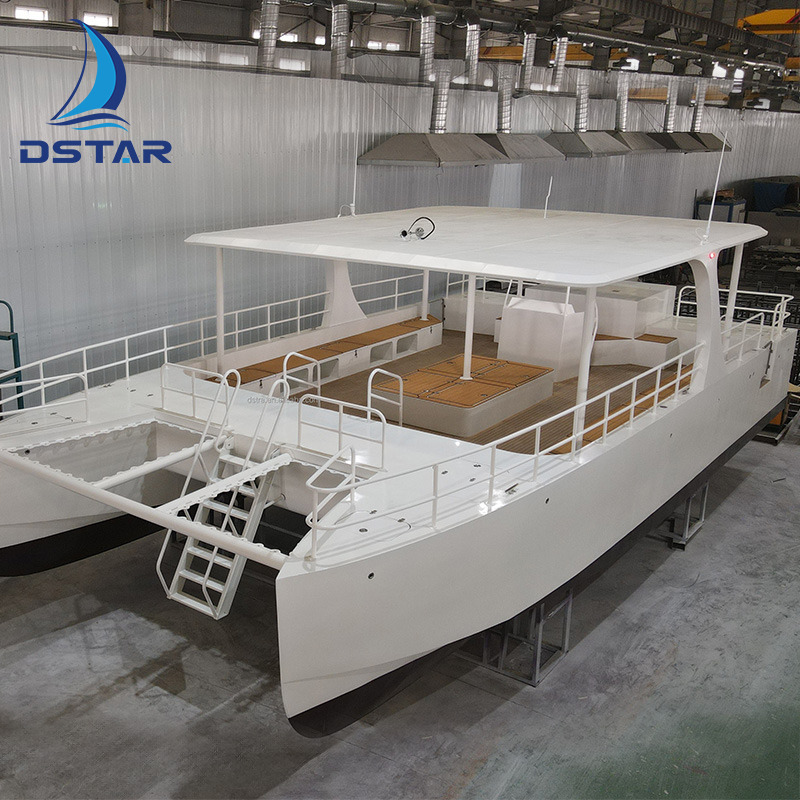
Hull design directly impacts passenger comfort and daily operational efficiency. Evaluate different hull shapes carefully with your naval architect. Symmetrical hulls offer highly predictable handling, excellent load-carrying capacity, and straightforward manufacturing. Asymmetrical hulls can significantly improve wave-piercing capabilities. They mitigate seasickness by reducing the harsh snap-roll effect common in multihulls operating in choppy waters. Advanced computational fluid dynamics can refine these shapes to reduce hydrodynamic drag, improving overall fuel efficiency.
Assess draft requirements strictly based on your intended operational geography. Shallow draft designs, often utilizing mini-keels, are mandatory for navigating shallow coastal estuaries or reef systems. They allow access to secluded anchorages that deeper vessels cannot reach. Deeper draft designs with high-aspect fixed keels provide superior open-water tracking and stability.
Propulsion systems require rigorous evaluation based on commercial duty cycles. Traditional twin inboard diesels offer proven reliability. They benefit from established global service networks and readily available parts. Emerging hybrid-electric systems provide a compelling alternative for specific routes. They offer silent operation and reduced engine maintenance.
Select specific engine brands based entirely on regional support. Global service network availability is non-negotiable for commercial operators. You need rapid access to spare parts and certified technicians within hours. Commercial maintenance cannot wait for overseas shipping.
Analyze engine room accessibility during the design phase. Mechanics need ample space to perform daily fluid checks and routine servicing safely. Cramped, poorly ventilated engine rooms lead to deferred maintenance, overheating, and eventual catastrophic breakdowns.
Rigging and sail plans require specialized attention for sailing variants. Evaluate mast placement carefully to balance the center of effort with the center of lateral resistance. The sail area-to-displacement ratio determines performance in light winds. Automated sail handling systems are absolutely essential for commercial operations. Electric winches, hydraulic furling systems, and self-tacking jibs reduce crew fatigue. They allow a smaller, highly trained crew to manage massive sail areas safely in changing weather conditions.
Specify sail manufacturers known for durable, offshore-grade materials like Hydranet. Custom mast and rigging setups must match your crew's handling capabilities and local wind profiles. Strict charter itineraries often necessitate motor-sailing to meet tight schedules. Ensure the standing rigging does not interfere with deck passenger flow or block premium viewing areas.
Deck layout dictates the flow of your daily operations and the overall guest experience. Analyze traffic patterns during peak service times, such as boarding or meal services. Prevent dangerous bottlenecks between the aft deck, the main saloon, and the forward lounging areas. Wide side decks, high bulwarks, and flush thresholds ensure safe passenger movement.
Integrate commercial-grade galleys thoughtfully. They must handle high-volume food preparation, massive refrigeration needs, and rapid cleanup. However, they cannot compromise the refined aesthetic of a premium vessel. Concealed appliances, custom stainless-steel cabinetry, and durable stone countertops blend commercial utility with luxury yacht design. The galley must feature exceptional ventilation to prevent cooking odors from permeating guest cabins.
Assess the value of integrating premium amenities. These features justify top-tier charter rates and differentiate your vessel from standard competitors.
Expansive flybridges with dedicated wet bars, teppanyaki grills, and hardtop shaded seating.
Heavy-duty hydraulic swim platforms for effortless water access and rapid tender deployment.
Fold-down beach clubs that expand the usable deck space at anchor, creating a private over-water lounge.
Forward cockpit lounges accessed directly from the main saloon for private sunset viewing.
Noise, Vibration, and Harshness (NVH) mitigation is a primary engineering focus. Acoustic transmission is the main drawback of rigid aluminum construction. Evaluate the shipyard's insulation protocols rigorously. Demand floating floors to isolate cabin spaces from hull and engine vibrations. Specify advanced acoustic dampening materials, such as viscoelastic layers and heavy mineral wool, throughout the engine rooms and generator spaces. Establish strict, contractually binding decibel levels for passenger cabins during cruising speeds.
High-end finishes must withstand incredibly heavy commercial foot traffic without looking worn. Custom luxury veneers require durable, marine-grade polyurethane topcoats. Upholstery must feature UV-resistant, waterproof, and easily cleanable fabrics. Decking materials like premium synthetic teak offer the exact aesthetic of real wood. They require zero sanding, do not absorb stains, and provide excellent slip resistance even when soaking wet.
Ensure massive redundancy in critical climate control systems. High-capacity, chilled-water HVAC systems are mandatory for tropical operations, providing even cooling without the noise of direct-expansion units. Commercial-grade watermakers must provide sufficient fresh water for all guests to shower daily without rationing. Reliable power generation through twin generators and expansive solar arrays ensures uninterrupted passenger comfort.
Plan for integrated water toy storage solutions. Modern luxury guests expect diverse aquatic activities immediately upon anchoring. Tender lifts, integrated dive compressor stations, seabob charging docks, and paddleboard racks are essential. These integrated features elevate a standard passenger vessel into a premier coastal cruising yacht, offering a complete resort experience on the water.
Evaluating the long-term financial performance requires a broad, multi-decade perspective. Custom metal construction demands a higher initial capital commitment than purchasing an off-the-shelf production fiberglass boat. However, operators must measure this initial expenditure against a projected commercial lifecycle of twenty to thirty years. When viewed through the lens of long-term operational viability, the financial metrics shift dramatically in favor of metal construction.
Model the financial impact of reduced operational downtime. Standard fiberglass vessels often lose weeks of peak-season revenue to complex structural repairs, blister remediation, or gelcoat crazing fixes. Metal hulls stay in the water earning revenue. Fewer days lost to structural maintenance directly improves your annual profitability. The inherent durability of metal translates to consistent, predictable operational availability, which is the cornerstone of a reliable charter business.
Analyze the secondary market for commercial multihulls. Purpose-built metal charter vessels hold their value exceptionally well. They remain structurally sound and fully certifiable long after composite vessels show severe fatigue and require massive refits. Market demand for well-maintained, commercially certified metal multihulls remains incredibly strong globally. Buyers recognize the inherent longevity of the material and the ease of refitting an aluminum interior. This strong resale value significantly improves the overall financial performance of the asset when it is time to upgrade your fleet.
Maritime classification and commercial survey standards are non-negotiable legal requirements. You must build to specific commercial codes from the very first naval architecture drawings. Common stringent standards include USCG Subchapter T for the United States, the CE Directive for Europe, or international classifications from Lloyd's Register or Bureau Veritas. These codes dictate everything from hull plate thickness and fire boundary insulation to intact stability requirements.
Identify the severe financial and legal risks of retrofitting a recreational vessel. Upgrading a standard production fiberglass boat to meet commercial fire safety and stability codes is often impossible. It typically requires tearing out entire interiors, replacing wiring, and reinforcing bulkheads, which destroys the vessel's value. Commissioning a purpose-built metal vessel ensures full compliance from day one. It prevents costly shipyard delays, certification failures, and denied insurance claims.
Galvanic corrosion management is a technical reality for all metal vessels. Electrolysis can rapidly degrade an unprotected hull if stray electrical currents are present in the marina. You must implement mandatory, multi-layered mitigation strategies.
Install heavy-duty marine-grade isolation transformers to block stray shore power currents completely.
Ensure proper, centralized grounding of all onboard electrical systems to a single point.
Utilize strict two-wire, ungrounded marine-grade wiring practices throughout the vessel.
Maintain a rigorous, documented schedule for inspecting and replacing sacrificial zinc or aluminum anodes.
Install active hull potential monitoring systems to alert the crew to any electrical leaks immediately.
Build timelines present a significant implementation risk for custom projects. Custom builds often face delayed deliveries due to supply chain issues or engineering changes. Structure your shipyard contracts carefully. Include clear construction milestones tied to payments. Implement enforceable penalty clauses for late delivery to protect your seasonal charter commitments.
Vetting shipyards requires thorough, uncompromising due diligence. Look for a proven track record specifically with metal multihulls, not just monohulls or steel commercial ships. Assess their financial stability to ensure they can complete the project without bankruptcy risks. Demand transparent post-delivery warranty support agreements. Most importantly, speak directly with past clients. Verifiable owner reviews from commercial fleet operators provide the best, unfiltered insight into a shipyard's build quality and reliability.
Hire an independent, multihull-specific naval architect to draft a comprehensive Statement of Requirements detailing your exact operational needs.
Engage a qualified marine surveyor early in the design phase to guarantee compliance with local commercial maritime codes.
Audit at least three specialized aluminum shipyards, demanding verifiable references from active commercial fleet operators.
Establish a rigid, milestone-based construction contract that includes strict penalty clauses for delayed delivery.
A: When engineered correctly by an experienced naval architect, an aluminum multihull weighs similarly to a solid fiberglass vessel of the same size. Marine-grade aluminum offers a superior balance of weight, impact resistance, and durability. This ensures excellent fuel efficiency without compromising the heavy-duty structural integrity needed for daily commercial operations.
A: Yes. Aluminum hulls can be meticulously faired and painted with high-gloss marine polyurethane systems. This provides a flawless, mirror-like finish identical to luxury composite yachts. However, many commercial operators prefer leaving the hull unpainted below the rub rail to eliminate the need for constant cosmetic scratch repairs.
A: Power configurations offer higher cruising speeds, strict schedule reliability, and maximum deck space, making them ideal for tight itineraries. Sailing configurations appeal heavily to eco-conscious demographics, offer silent cruising, and drastically reduce fuel consumption. Your choice must align perfectly with your specific charter routes and target audience expectations.
A: Galvanic corrosion is prevented through comprehensive active and passive systems. You must install isolation transformers, use proper two-wire ungrounded electrical systems, and maintain a strict schedule for replacing sacrificial anodes. Regular hull potential monitoring with a reference electrode ensures the vessel remains fully protected at all times.
A: With proper routine maintenance and strict corrosion management, a commercial metal multihull can easily operate for 20 to 30 years or more. Unlike fiberglass, the metal does not suffer from osmosis or UV-induced structural degradation, allowing it to maintain its core strength through decades of heavy charter use.
A: Yes. You must never use copper-based anti-fouling paints on an aluminum hull, as the copper will cause severe galvanic corrosion with the aluminum. You must specify copper-free alternatives, such as thiocyanate-based paints or advanced silicone foul-release coatings, to protect the hull safely.


