Views: 0 Author: Site Editor Publish Time: 2026-09-28 Origin: Site


When a storage tank or terminal fire breaks out on an industrial waterfront, the decisive advantage is almost always access — and access from the water is something land-based firefighting simply cannot provide. Dedicated fire barges, designed as floating pumping and monitor platforms, are increasingly the answer.
Tank farms, fuel terminals and chemical quays present a difficult combination of hazards: large volumes of flammable product, congested pipework, and a fire front that can extend hundreds of metres along a shoreline. Road access is limited to fixed gateways and causeways, aerial appliances work from outside the bund, and a burning tank radiates heat that keeps crews at distance. Attacking the same fire from the water side changes the geometry entirely — a floating platform can position directly against the quay, deliver high-volume cooling to tank walls and adjacent structures, and lay down a protective curtain between the fire and the rest of the terminal.
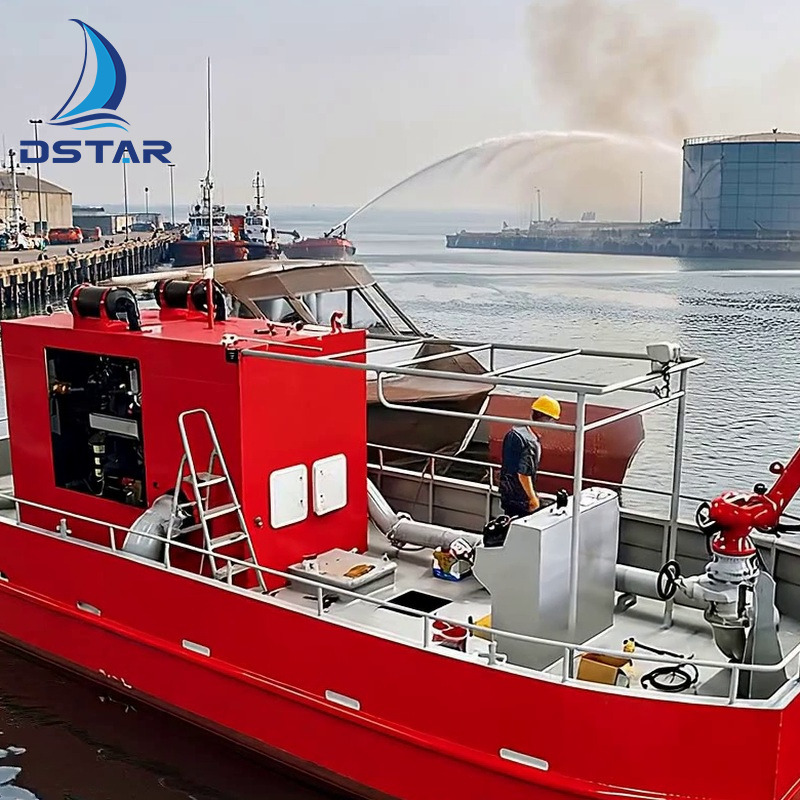
Conventional fireboats are built for speed and sea-keeping, which typically means deeper draft and hull forms that cannot be pushed hard against a quay wall, jetty or shallow berth. A fire barge takes the opposite approach: shallow draft, a stable flat working deck, and pump and monitor capacity as the primary design driver. The new 11.5m aluminum fire fighting barge illustrates the concept — a 0.15–0.30 m design draft lets it work tight against the shoreline, while a self-priming DOOSAN PU158Ti diesel pump delivers 10,000 L/min to an electrically controlled bow monitor rated at 9,000 L/min and 12 bar, backed by two 2,400 L/min stern monitors. Three simultaneous streams, plus a 200-litre foam system for hydrocarbon fires, can be sustained for 8–10 hours.
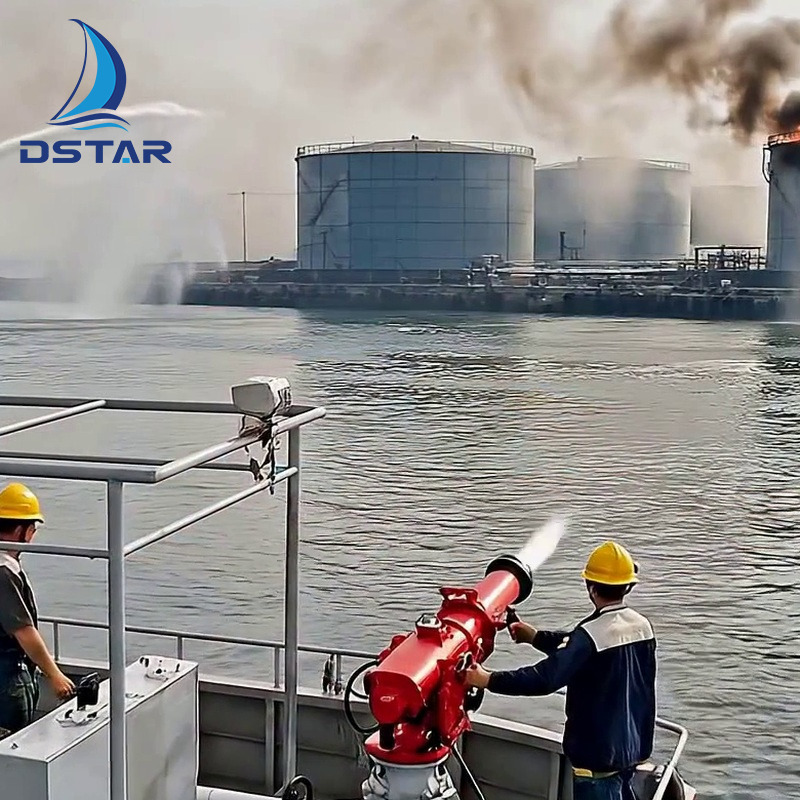
Aluminum is the material of choice for this duty. A welded marine-grade aluminum structure keeps the barge light enough to be road-transported or lifted into position, resists the corrosive salt and chemical environment of a terminal, and allows the large open deck area needed for pump sets, piping and monitor arcs. Crews work directly beside the equipment, which simplifies maintenance and lets monitors be trained by hand or by remote electric control depending on the installation.
Choosing a firefighting vessel starts with the risk profile: the size and type of product stored, the layout of the waterfront, the available draft, and the required flow rate and foam capability. A dedicated aluminum fire fighting vessel is the better answer where patrol speed and sea-keeping matter, while a barge configuration suits static or semi-static protection of a specific terminal. Pump capacity, monitor type and positioning, foam tank size and deck equipment can all be specified to the site.
Qingdao Dookyu Crown Marine designs and builds aluminum firefighting vessels and barges, patrol craft and workboats. Operators, terminal authorities and port fire services are welcome to contact the shipyard with their site requirements, or explore the full range of aluminum boats on the website.