

Views: 0 Author: Site Editor Publish Time: 2026-09-21 Origin: Site


Catamarans are no longer a niche within the boat market. Across passenger transport, sightseeing and private leisure cruising, twin-hull designs are steadily taking share from traditional monohulls — and the reasons are technical, commercial and experiential at the same time.
The defining advantage of a catamaran is initial stability. Because buoyancy is distributed across two widely separated hulls rather than a single narrower hull, rolling motion is dramatically reduced. Passengers who would feel uncomfortable on a monohull in choppy water remain at ease on a catamaran, and crew can work, serve and move around without the constant bracing that a monohull demands. The same geometry also produces a much wider deck for a given length: a 38ft catamaran offers interior volume that a monohull of the same length cannot match, which is why the layout can include a full salon, galley, bathroom and separate cabin units.
For operators, the economics are equally persuasive. Lower hydrodynamic resistance means less fuel burned per passenger carried, and the wide, stable deck simplifies boarding, circulation and seating — the practical details that determine turnaround times on busy routes. A purpose-configured commercial platform such as the 11.6m FRP catamaran passenger boat illustrates the pattern: twelve-passenger capacity, a weather-protected salon, twin outboard redundancy and navigation equipment including GARMIN radar, VHF and electronic chart systems, all within a shallow 0.694 m design draft that opens up small harbours and beach landings.
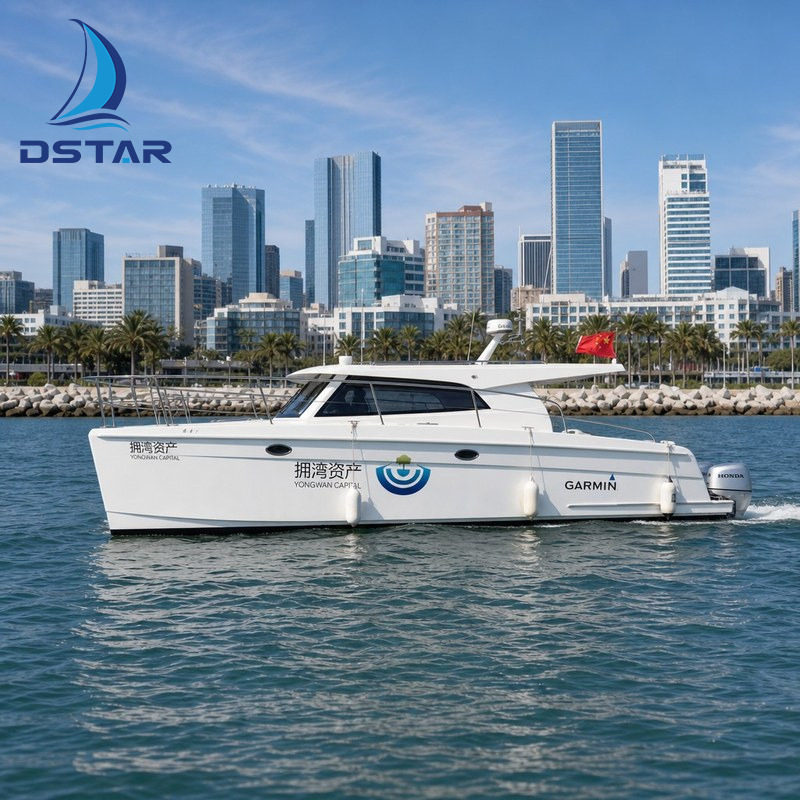
For private owners, the twin-hull platform changes what a boat of this size can do. Reduced rolling makes meals, drinks and children's activities genuinely relaxed; the shallow draft allows anchoring closer to beaches and sheltered bays; and full LED lighting, marine audio, a galley with induction cooker and microwave, a heated shower and an integrated bathroom turn day trips into comfortable weekend cruising. The 38ft FRP catamaran leisure cruiser is laid out around exactly this idea, combining two cabin units with a bright salon and open decks for swimming and fishing.
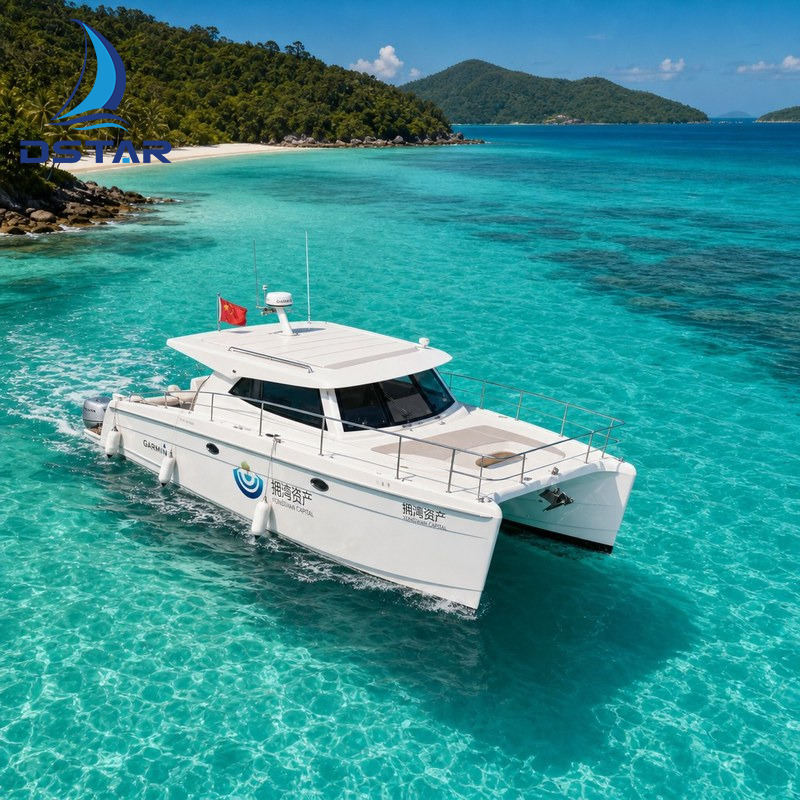
Buyers evaluating a twin-hull vessel should define their duty profile first: passenger numbers and route length for commercial service, or accommodation and cruising pattern for private use. Propulsion choice, cabin configuration, interior finishes and deck equipment are then specified to match. Marine-grade construction, classification and safety equipment should always be confirmed against local operating requirements.
Qingdao Dookyu Crown Marine builds catamaran motor boats, passenger craft and cruising vessels. Operators and buyers are welcome to contact the shipyard with their requirements, or explore the full range of aluminum and FRP boats on the website.


