

Views: 0 Author: Site Editor Publish Time: 2026-08-13 Origin: Site


Commissioning a new passenger ferry requires balancing strict regulatory compliance, operational efficiency, and high capital expenditure (CAPEX). Fleet operators must navigate complex design choices long before construction begins to ensure project success. Moving from conceptual route requirements to engineering reality challenges many project teams. Fleet managers face immense pressure to get these early decisions right. Slight design miscalculations compound rapidly over a 20-to-30-year vessel lifespan. These early errors significantly reduce long-term profitability, hinder daily operations, and compromise passenger safety.
This evaluation framework helps fleet managers and operators clearly define their technical requirements. We will explore hull materials, route-specific constraints, passenger ergonomics, and lifecycle maintenance planning. You will learn how to structure your operational demands before approaching shipyards. This rigorous preparation ensures your new vessel delivers reliable service from its first day on the water.
Hull material and configuration (e.g., an Aluminum Catamaran Boat) dictate fuel efficiency, stability, and terminal compatibility.
Passenger capacity must be balanced against weight distribution, seating ergonomics, and Coast Guard/IMO stability regulations.
Route-specific constraints (wake wash limits, draft, berthing infrastructure) must lead the design process, not follow it.
Commercial transit operations heavily favor the Aluminum Passenger Boat for several structural and operational reasons. Fleet managers need vessels offering maximum payload capacity alongside minimal fuel consumption. Marine-grade aluminum alloys, specifically 5083 and 5086, deliver an exceptional strength-to-weight ratio. You get a significantly lighter vessel compared to traditional steel builds. This reduced weight directly lowers daily fuel burn. It also allows the vessel to operate safely in shallower drafts. Composite materials like fiberglass (FRP) offer alternative lightweight options. However, FRP lacks the impact resistance and customization flexibility inherent to welded marine aluminum.
Operators must also choose between monohull and catamaran configurations. An Aluminum Catamaran Boat defines a highly efficient operational envelope for specific routes. It provides a considerably wider beam than a monohull. This wider footprint delivers superior transverse stability. Passengers experience far less rolling motion during rough transit. The twin-hull design also creates a massive main deck space. This expansive deck enables faster passenger turnaround times at the dock. However, operators must carefully evaluate the trade-offs. Catamarans require a higher initial build cost. Their wide stance also demands larger, specialized berthing facilities.
The following material comparison table highlights core differences guiding these engineering decisions.
| Material Type | Weight Profile | Fuel Efficiency Impact | Customization Potential |
|---|---|---|---|
| Marine Aluminum (5083/5086) | Very Light | Excellent | High (Easy to weld and modify) |
| Marine Steel | Heavy | Poor | High |
| FRP (Composite) | Light | Good | Low (Dependent on fixed molds) |
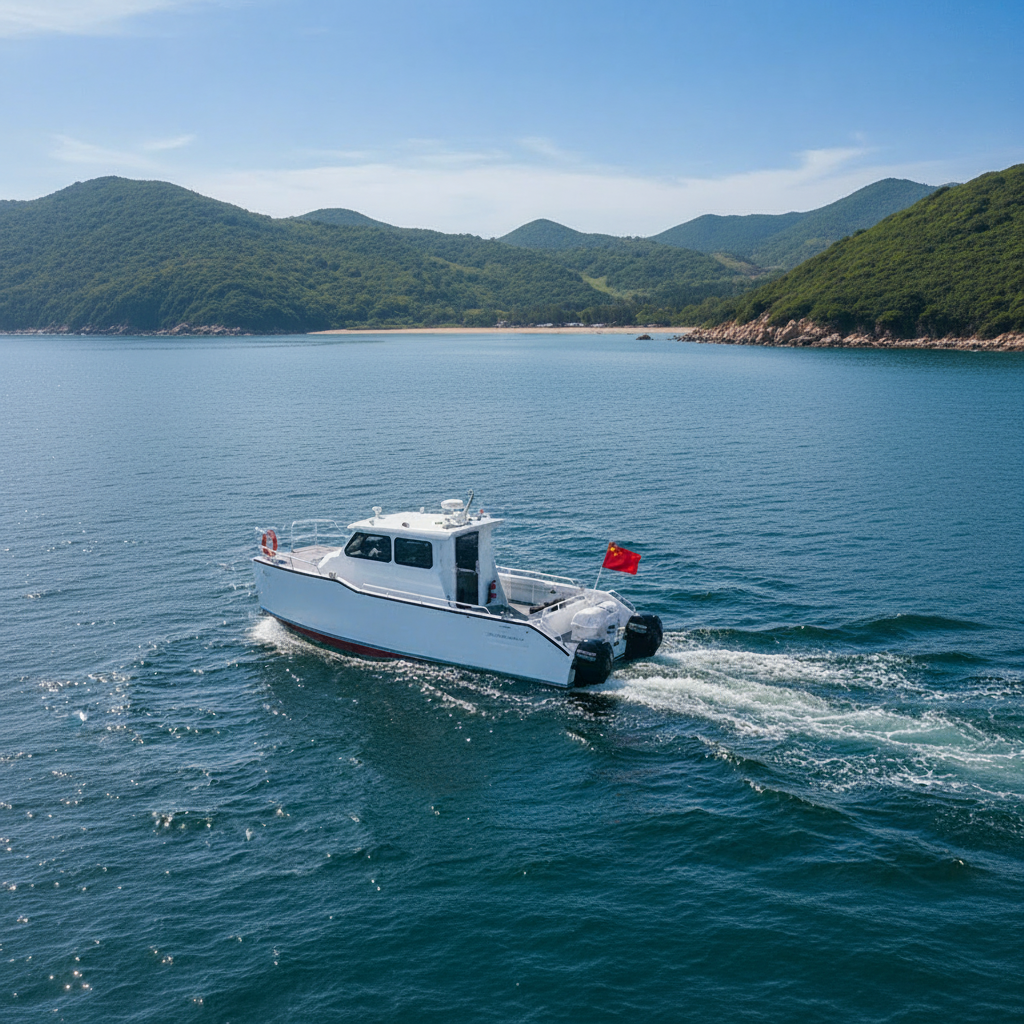
Ferry designs must strictly align with existing infrastructure. You cannot force a generic vessel into a highly specific terminal environment. Matching the passenger ferry boat to existing berthing facilities ensures smooth daily operations. Naval architects evaluate freeboard height variations across different local tide levels. They calculate optimal boarding ramp angles for safe pedestrian access. Piling layouts at the terminal must perfectly match the vessel's rubbing strakes and boarding gates.
Environmental limits profoundly influence vessel engineering. Fleet managers must audit their entire route before approving a design. Shallow harbors or seasonal lakes impose strict draft restrictions. You might need specialized propulsion systems, like waterjets, to navigate these shallow zones safely.
Consider the following environmental checks during the feasibility stage:
Wake Wash Restrictions: Narrow channels and ecologically sensitive zones legally limit wave generation. Designers adjust hull shapes to minimize wake displacement.
Draft Limitations: Identify the lowest historical water levels along the route. Ensure the hull design maintains safe under-keel clearance at all times.
Overhead Clearances: Inland waterways often feature low bridges. Calculate mast heights and radar placements to guarantee safe passage during high tides.
Current and Wind Profiles: High crosswinds easily push vessels off course. Ensure lateral thruster capacity matches local environmental extremes.
Regulatory frameworks govern every aspect of passenger vessel design. You must design to specific classification societies from the very beginning. Common industry frameworks include DNV, ABS, and Bureau Veritas. Local maritime authorities like the USCG, MCA, or AMSA enforce strict operational standards based on your jurisdiction. Ignoring these rules during the early design phase guarantees severe delays later.
Damage stability represents a critical engineering focus. Engineers must calculate precise buoyancy reserves. They design watertight bulkheads to contain flooding if the hull breaches. The vessel must remain upright and afloat even after sustaining significant structural damage. This resilience provides the necessary time for safe passenger evacuation.
Fire safety systems directly impact interior layouts. Structural fire protection dictates bulkhead materials and insulation thicknesses. Designers calculate evacuation route flow rates carefully. Hallways and stairwells must handle panicked crowds smoothly without bottlenecking. Life-saving appliance (LSA) placement requires strategic planning. You must store life jackets and deployable rafts accessibly. However, you cannot let these bulky appliances block primary walkways or compromise payload capacity.
Maximizing ticket revenue creates tension against the overall passenger experience. You want to fit as many seats as possible. Passengers want personal space and comfort. Achieving the right seating density requires strategic planning. Seat pitch directly affects perceived comfort during longer journeys. Marine-grade anti-corrosive materials keep cabins looking fresh after years of constant use. High-speed routes demand shock-mitigating seating. These specialized seats protect passengers from spinal impacts during rough sea crossings.
Noise, Vibration, and Harshness (NVH) significantly degrade passenger satisfaction. High-frequency engine whine causes intense travel fatigue. Shipyards deploy advanced acoustic insulation strategies in the engine room. They isolate vibrating machinery using flexible engine mounts. Sound-damping materials line the hull to reduce water noise entering the main cabin.
This brief chart outlines common NVH mitigation targets during the design phase:
| Noise Source | Mitigation Strategy | Expected Outcome |
|---|---|---|
| Engine Block | Flexible mounting systems | Reduced structural vibration transmission |
| Exhaust Systems | Wet exhaust mufflers and isolators | Lowered airborne decibel levels in aft cabins |
| Hull Impact | Acoustic damping tiles | Muted wave-slap noise transferring through the deck |
Climate control represents another major design hurdle. HVAC considerations dictate airflow design. Fully enclosed cabins require robust, continuous ventilation. The system must exchange air rapidly to maintain sanitary conditions. However, high-capacity HVAC systems draw massive electrical power. Engineers balance this electrical power draw against available generator capacity to maintain passenger safety.
Preventative maintenance considerations engineered into the vessel ensure long-term operational longevity. Galvanic corrosion represents a constant threat to any metal vessel. Dissimilar metals submerged in saltwater create a destructive electrical current. This current degrades the softer aluminum structure over time. Proper anode placement provides sacrificial metal to absorb this corrosion. Shipbuilders mandate strict electrical isolation between dissimilar metals. High-performance marine coatings offer an additional barrier against the elements.
Serviceability dictates your harbor downtime. A poorly designed engine room turns routine oil changes into multiday ordeals. Naval architects emphasize the importance of designing accessible engine hatches. Technicians need wide pipe chases and neatly organized electrical conduits. Easy access allows mechanics to diagnose and fix problems quickly. Your fleet stays on the water earning revenue rather than sitting idle in the repair yard.
Vessel lifespans often outlast initial propulsion technologies. Repowering potential remains a crucial design factor. You must design engine beds capable of accepting different footprints. Aft structures should easily accommodate future propulsion upgrades. An operator might transition to hybrid-electric outboards eventually. Others may install updated diesel waterjets. Designing modular engine bays prevents major structural surgery down the road.
Routine maintenance tasks require careful planning during the initial build:
Designate clear overhead pathways for removing heavy machinery components.
Install diagnostic electrical ports in easily reachable locations.
Standardize fluid filter sizes across the entire fleet to simplify parts inventory.
Apply anti-fouling hull treatments specific to the local marine environment.
Selecting the right builder guarantees project success. The process begins with Request for Proposal (RFP) preparation. Operators should build a functional specification document. Avoid drafting a highly prescriptive design yourself. A functional specification outlines what the vessel must achieve. It details required speed, passenger capacity, draft limits, and route conditions. This functional approach allows experienced naval architects to optimize solutions based on their engineering expertise.
Evaluate competing shipyards using evidence-based criteria. Marketing brochures rarely tell the whole story. You must verify their past performance on similar routes. Ask for references from current fleet operators. Investigate their weight-control programs during the build process. A shipyard lacking strict weight control often delivers an overweight vessel. Overweight ferries suffer from poor speed and excessive fuel consumption. Finally, scrutinize the warranty terms. A strong warranty demonstrates the builder stands firmly behind their craftsmanship and materials.
A profitable ferry operation always starts with a purpose-built design. You must address the physical and economic realities defining your specific route. Generic vessel templates rarely meet the complex demands of modern commuter transit. Carefully selecting hull materials, enforcing rigorous safety standards, and planning for accessible maintenance builds a reliable operational foundation. Your early engineering choices directly dictate daily efficiency for decades.
Take proactive steps before finalizing any procurement documents. Map out your terminal infrastructure measurements in detail. Define your acceptable passenger comfort metrics clearly. Next, schedule a comprehensive fleet assessment with qualified naval architects. Discuss how an optimal aluminum passenger or catamaran design specifically fits your unique business case. Securing expert guidance early in the planning phase prevents costly modifications later.
A: Aluminum offers an unmatched strength-to-weight ratio. This dramatically reduces overall vessel weight. Lighter boats burn less fuel and operate safely in shallower waters. Aluminum also meets strict commercial fire safety regulations more easily than flammable fiberglass. Furthermore, shipyards can easily customize welded aluminum designs without requiring expensive new hull molds. Aluminum also boasts high end-of-life recyclability.
A: Catamarans feature two slender hulls. This design significantly reduces wave-making resistance at higher speeds. They achieve highly favorable specific speed-to-length ratios. While the total wetted surface area might increase, the streamlined hulls slice through water efficiently. This allows catamarans to cruise faster using less horsepower than equivalent wide-beam monohulls, optimizing long-term fuel consumption.
A: Galvanic corrosion prevention demands constant vigilance. Operators must regularly inspect and replace sacrificial anodes. You must meticulously isolate any stainless steel fittings from the aluminum hull. Applying and maintaining compatible anti-fouling paint is critical, as copper-based paints destroy aluminum. Additionally, technicians must continuously monitor high-stress structural joints for early signs of weld fatigue.
A: Retrofitting is extremely difficult. Battery banks impose massive weight penalties and demand large, climate-controlled spaces. Existing hulls rarely possess the required buoyancy reserves or structural reinforcement to handle this added weight safely. Purpose-built designs are usually required to correctly balance the vessel and optimize the hull shape for electric propulsion systems.


