

Views: 0 Author: Site Editor Publish Time: 2026-07-12 Origin: Site


Commercial marine transport operators face compounding pressures daily. Rising fuel costs squeeze operational margins tightly. Stricter emissions regulations force rapid fleet modernization globally. The constant demand for vessel uptime leaves zero room for error. Choosing between hull materials is no longer just a technical preference. It is a foundational business decision dictating long-term financial viability. Fleet managers must weigh initial investments against lifetime operational expenses accurately.
This guide provides an objective, evidence-based evaluation of modern material choices. We focus on verifiable operational outcomes and implementation realities. You will learn how material choices impact payload capacity directly. We explore maintenance schedules, regulatory compliance, and overall profitability. Transitioning to lighter materials helps operators future-proof their critical marine assets. You can make informed decisions by understanding these fundamental industry shifts.
Fuel & Payload Efficiency: Aluminum hulls are significantly lighter than steel equivalents, directly improving fuel burn rates and allowing for higher payload capacities.
Lifecycle Maintenance: Marine-grade aluminum naturally resists corrosion, virtually eliminating the need for costly, routine sandblasting and protective coating cycles.
TCO Realities: While requiring a higher upfront capital expenditure (CapEx), the investment typically reaches a break-even point within 3–5 years through reduced operational downtime.
Risk Mitigation: Successful adoption requires strict adherence to galvanic corrosion prevention (anodes, electrical isolation) and access to specialized welding for repairs.
Operators measure commercial vessel profitability by a very simple metric. You compare days on the water against days stuck in dry dock. Every hour spent out of service actively drains revenue. Routine maintenance schedules dictate your fleet's true earning potential. Selecting an Aluminum Work Boat minimizes structural maintenance downtime significantly. You keep the asset working longer between required service intervals.
Reduced displacement translates directly into measurable business outcomes. Lighter vessels displace less water along the hull line. This lowers hydrodynamic drag substantially. You need lower horsepower requirements to reach operational speeds. Smaller engines consume significantly less fuel over similar distances. Alternatively, you can use the saved hull weight to increase payload capacities. We see direct, measurable boosts to bottom-line revenue using this formula.
Environmental regulations target the maritime industry aggressively today. Lighter vessels assist operators in meeting stringent decarbonization targets. Port authorities increasingly restrict heavy-polluting vessels from prime berths. A lighter hull burns less fuel naturally. This provides an immediate reduction in your carbon footprint. You maintain regulatory compliance easier while avoiding potential emissions penalties.
Marine-grade alloys provide incredible structural integrity. Builders rely heavily on 5083 and 5086 aluminum series. These specific alloys match steel strength across critical load paths. However, they achieve this at a fraction of the total weight. This unique characteristic provides operators massive flexibility. You can navigate shallower drafts easily. Inland transport routes and tidal ports become highly accessible. You unlock new operational territories previously closed to heavier cargo vessels.
Aluminum possesses a fascinating metallurgical reality. It forms an instant, protective oxide layer when exposed to air or water. This microscopic barrier halts deep oxidation entirely. The metal effectively heals itself if scratched. We contrast this sharply against standard steel hulls. Steel requires constant barrier protection systems. Operators must repeatedly sandblast and paint steel surfaces to prevent degradation. An Aluminum Work Boat bypasses these expensive, labor-intensive maintenance cycles completely.
Safety and durability remain paramount in commercial transport. Aluminum features a relatively low modulus of elasticity. It absorbs impact kinetic energy efficiently during collisions. The hull will flex and dent rather than fracture. Minor collisions occur frequently near concrete docks or floating debris. Aluminum yields gracefully under sudden stress. It keeps the hull watertight and protects the crew effectively.
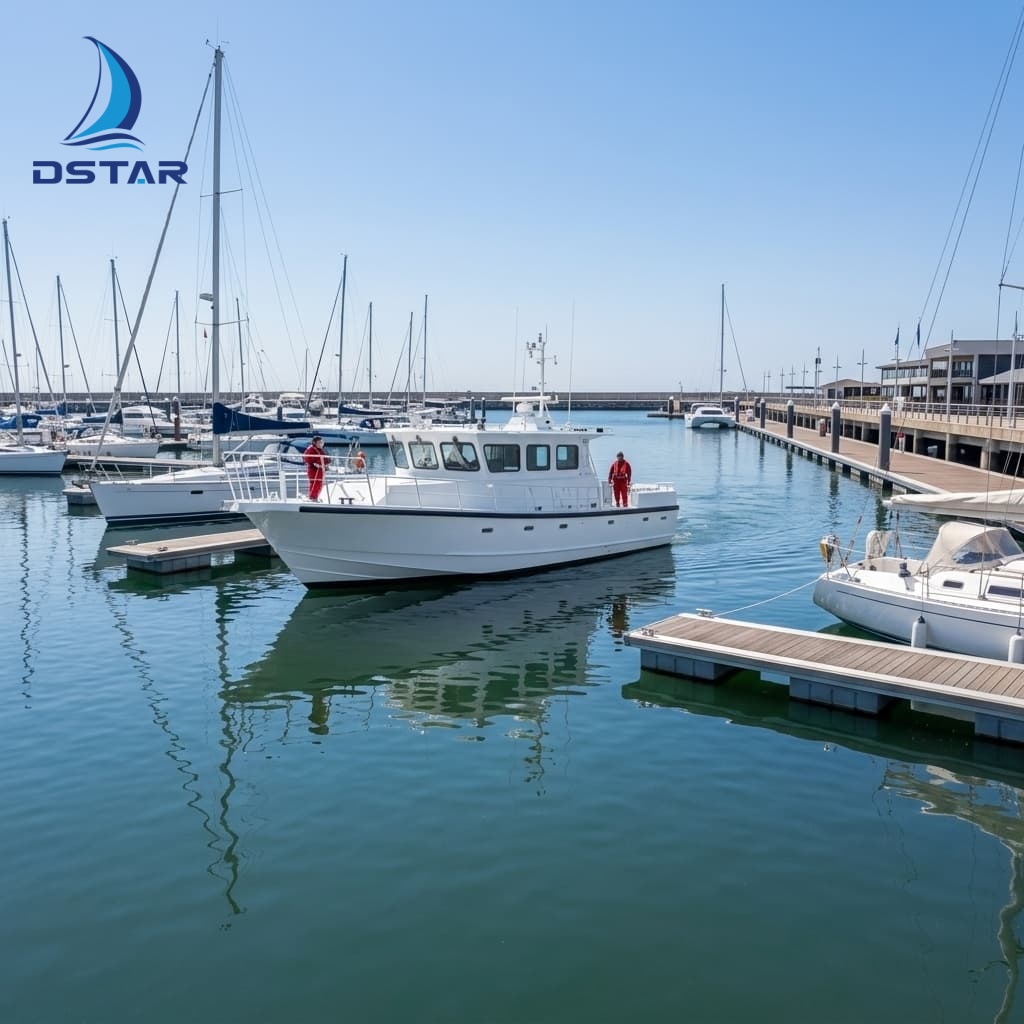
Different materials serve entirely different operational profiles. Steel works optimally for massive, low-speed cargo ships navigating deep oceans. Aluminum dominates the high-speed marine transport sector. Crew transfer boats, fast ferries, and harbor patrol vessels rely on it heavily. High-frequency transport demands rapid acceleration and supreme agility. Lighter hulls deliver this performance metric flawlessly.
Financial modeling reveals distinct differences between these materials over time. Steel offers a noticeably lower initial build cost at the shipyard. However, aluminum provides drastically lower ongoing maintenance expenses. You burn less fuel annually. You skip expensive dry-dock painting schedules. These operational savings compound rapidly. The overall financial outlook favors lighter materials over a twenty-year operational lifespan.
Metals depreciate differently as they age. Aluminum retains a significantly higher scrap and recycling value globally. Decommissioning an aging asset becomes less of a financial burden. You recover a larger percentage of your initial investment. This final cash injection improves overall project profitability when replacing older fleet units.
| Material Feature | Marine-Grade Aluminum | Carbon Steel |
|---|---|---|
| Weight Profile | Ultra-lightweight | Extremely heavy |
| Maintenance Needs | Low (Self-healing oxide layer) | High (Constant barrier painting) |
| Operational Speed | High-speed, rapid transit optimal | Low-speed, massive cargo optimal |
| End-of-Life Value | High recycling commodity value | Low scrap metal value |
We must evaluate these vessels through a skeptic’s lens. Dissimilar metals submerged in saltwater create severe risks. They form a destructive electrical circuit. Proper sacrificial anodes remain absolutely mandatory. You must install dielectric barriers between stainless steel fittings and the hull. Isolated electrical systems protect the vessel from stray currents. Without these strict precautions, an Aluminum Work Boat can degrade rapidly in harsh marine environments.
Routine maintenance remains impressively low. However, structural repairs present unique logistical challenges. Fixing a torn plate requires highly skilled professionals. Specialized MIG and TIG aluminum welders are essential for structural integrity. These experts may be scarce in remote operational areas. You must plan your emergency repair logistics carefully. Identifying qualified regional shipyards beforehand prevents prolonged downtime.
Let us address the financial realities transparently. Raw aluminum commodity prices drive up initial costs. Specialized fabrication labor adds to the final shipyard invoice. You should expect a 15–30% premium on upfront build expenses compared to steel. The projected operational savings must justify this capital expenditure jump. Fleet managers must verify these numbers thoroughly before signing construction contracts.
Shipyards process lightweight metals much differently than heavy steel plates. Aluminum is easier to cut, form, and weld precisely. Builders highly customize deck layouts easily. They adapt wheelhouses and cargo holds to your specific route demands. You avoid exorbitant retooling costs during the design phase. This manufacturing agility makes scaling customized fleet designs significantly simpler.
Major classification societies understand lightweight alloys deeply. The ABS, DNV, and USCG provide standardized evaluation criteria. They publish strict rules for high-speed light craft construction. Surveyors evaluate and certify commercial vessels routinely using these frameworks. This established oversight ensures seamless insurability. You maintain full regulatory compliance across international operational zones.
You must find builders with proven commercial track records. Recreational builders often lack heavy-duty fabrication experience. Commercial marine transport demands continuous punishment. You need a partner who understands high-hour operational profiles. Look for shipyards deploying thick hull plating and robust commercial fendering systems.
Quality documentation separates premium builders from average ones. Follow these verification steps closely:
Request specialized welding certifications for their entire fabrication team upfront.
Review their non-destructive testing (NDT) processes, including dye penetrant and x-ray logs.
Examine their structural hull warranty terms carefully for operational exclusions.
Audit past client references regarding structural integrity after five years of service.
Move far beyond the initial shipyard price quote. Ask shortlisted builders for a comprehensive 10-year maintenance projection. Require a detailed fuel consumption model based specifically on your route profile. You need to see the projected operational expenses clearly. This data justifies the initial capital investment to your stakeholders.
An Aluminum Work Boat stands as the superior choice for modern fleet operations. It prioritizes long-term financial health over cheap initial build costs. It delivers exceptional fuel efficiency and rapid transit speeds reliably. These operational benefits heavily outweigh the higher upfront capital expenditure required. You unlock shallower ports, reduce maintenance downtime, and meet strict emissions targets naturally.
To begin your transition, audit your current fleet immediately. Calculate your annual steel maintenance costs accurately. Review your monthly fuel logs to establish a firm baseline. Armed with this hard data, you can consult a qualified marine architect confidently. They will help design a lightweight vessel perfectly matched to your commercial transport needs.
A: A well-maintained vessel typically lasts 30 to 40 years. You must manage galvanic protection systems proactively. Routine electrical inspections remain critical. If operators adhere to standard maintenance schedules, the hull will easily outlast its internal propulsion systems and navigation electronics.
A: Ice-class aluminum vessels operate successfully worldwide. Builders achieve this through thicker hull plating and highly reinforced internal framing. They handle light surface ice and moderate debris effectively. However, carbon steel remains the definitive industry standard for heavy, continuous ice-breaking operations.
A: Aluminum lacks the infinite fatigue limit found in steel. However, modern naval architecture accounts for this metallurgical reality entirely. Engineers over-design known structural stress points deliberately. They distribute loads evenly across the hull. This approach makes metal fatigue a non-issue during standard commercial lifespans.


