

Views: 0 Author: Site Editor Publish Time: 2026-10-05 Origin: Site


Commercial maritime demand is shifting fast. Fleet operators constantly struggle to balance payload capacity, fluctuating fuel costs, and passenger comfort. In this comprehensive engineering guide, you will learn how to navigate the complexities of choosing the right commercial twin-hull vessel for your specific business model. Making the correct technical decisions today ensures a high return on investment for decades to come.
Determine Your Primary Use Case: Layouts, engine specifications, and interior designs differ significantly depending on whether you operate a high-speed commuter service or a leisurely sightseeing route.
Material Matters: Evaluating hull materials is critical. Investing in a steel hull offers unparalleled durability and longevity for heavy-duty commercial operations in challenging marine environments.
Prioritize Passenger Comfort: The natural stability and wide beam of a twin-hull design inherently reduce rolling motions. This minimizes passenger seasickness and maximizes usable deck space.
Understand Total Cost of Ownership: Commercial buyers must look beyond the initial shipyard purchase price. You must factor in long-term fuel efficiency, routine maintenance, crew requirements, and regulatory compliance.
Safety and Compliance are Non-Negotiable: Ensure your vessel meets all local and international maritime safety standards before finalizing any procurement contract.
Before diving into vessel specifications, we must examine the macroeconomic trends reshaping commercial fleets. Recent maritime industry analyses highlight a dramatic shift toward decarbonization and operational efficiency. With global environmental regulations tightening and port authorities implementing strict emission zones, fleet operators are increasingly moving away from traditional, heavy-displacement monohulls.
The current market heavily favors high-efficiency twin-hull designs. These vessels offer lower hydrodynamic drag, which directly translates to reduced fuel consumption. Furthermore, there is a rising consumer demand for sustainable eco-tourism. This pushes operators to seek versatile platforms capable of integrating diesel-electric hybrid propulsion systems. Understanding these trends is vital. Future-proofing your asset against upcoming carbon taxes and shifting consumer preferences will dictate your long-term profitability.
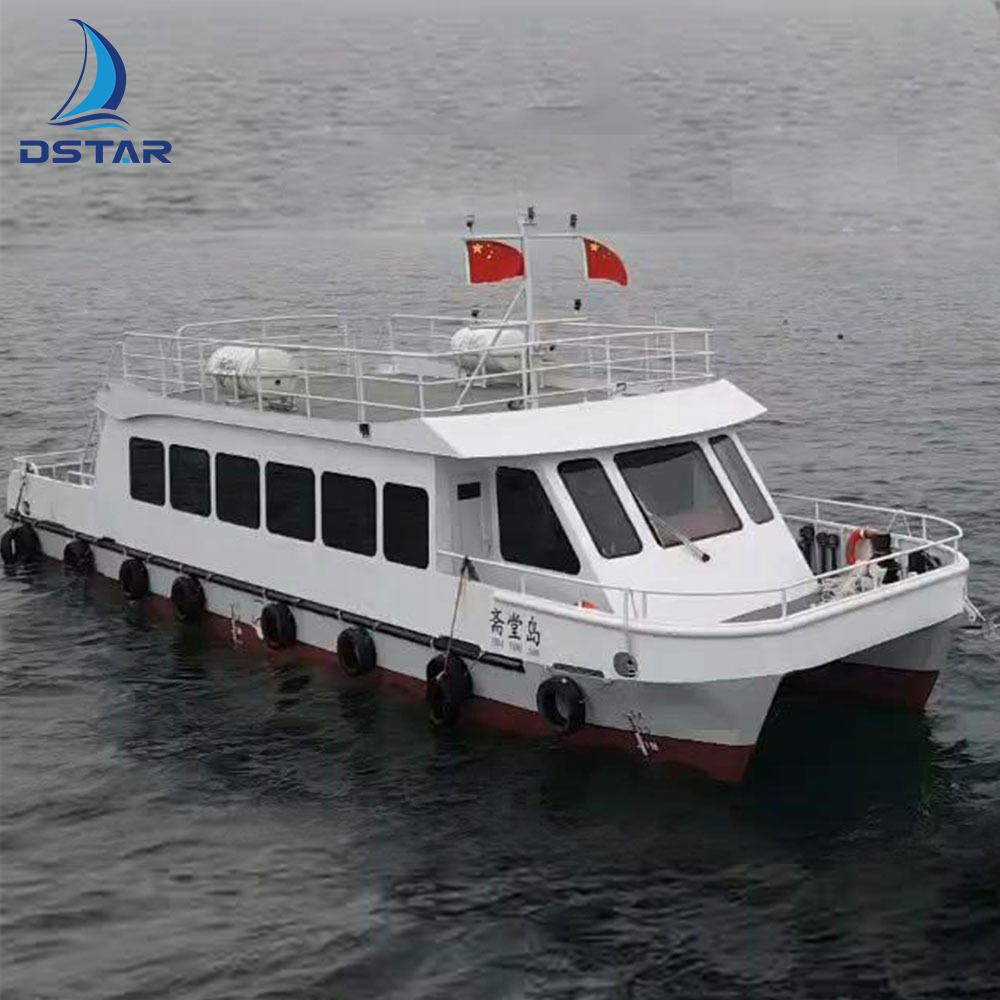
For commercial fleet operators, selecting the right hull design is the foundational decision dictating future profitability. Twin-hull configurations have increasingly replaced traditional monohulls in commercial fleets due to several quantifiable operational advantages.
The primary physical advantage of a catamaran is its geometric stance. Traditional monohulls act as a single pivot point in the water. Consider a fully loaded commuter ferry navigating a choppy harbor. A monohull inevitably sways side-to-side, causing severe passenger discomfort. Catamarans distribute their buoyancy across two separate hulls spaced wide apart. This effectively eliminates severe rolling. For commercial operators, this translates directly to increased passenger comfort and a drastic reduction in seasickness. Maintaining positive customer reviews is absolutely crucial for generating repeat business.
Because a twin-hull does not taper into a single point like a monohull, its beam is carried almost entirely across the vessel's footprint. This rectangular platform provides a significantly larger square footage for the main deck. Consequently, operators can leverage this space for higher passenger capacities, broader aisles for faster boarding, and highly flexible seating arrangements. More usable deck space directly correlates with higher potential ticket revenue per voyage.
Despite their considerable size and carrying capacity, these vessels displace water differently than monohulls. This results in a much shallower draft. A shallow draft allows these ships to navigate in coastal waters, estuaries, and rivers that would ground deep-V hulls. This specific capability grants commercial operators lucrative access to secluded beaches, shallow-water island ports, and inland waterways.
Before engaging a naval architect, operators must strictly define their revenue model. A vessel designed for daily commuter transit requires vastly different specifications than one built for eco-tourism.
A commercial Passenger Transport Boat is primarily built for utility, efficiency, and speed. Commuter routes require strict adherence to timetables. For example, a standard 19-meter commercial configuration often utilizes high-speed twin inboard propulsion systems capable of maintaining 20 to 30 knots. The interior layout prioritizes dense, airline-style seating to maximize the payload per trip, often accommodating upwards of 100 passengers depending on the deck layout. Cabins are typically fully enclosed and climate-controlled. Furthermore, the deck layout must feature wide, unobstructed gangways to facilitate rapid passenger turnaround times at the dock.
In stark contrast, a Sightseeing Transport Boat is designed entirely around the passenger experience. Speed is secondary to smooth cruising and low engine noise. These vessels require open-air viewing decks, expansive panoramic windows in enclosed areas, and spacious seating. Additional space must be allocated for luxury amenities. Integrating onboard bars, catering stations, and multiple accessible restrooms ensures a premium experience during longer tours. This allows operators to charge higher ticket premiums.
To assist in your procurement planning, review this technical comparison between the two primary commercial configurations.
| Feature | Commuter Transport Ferry | Eco-Tourism Sightseeing Vessel |
|---|---|---|
| Primary Goal | Speed, high volume, rapid boarding | Comfort, low noise, premium amenities |
| Cruising Speed | 20 - 30+ Knots | 12 - 18 Knots |
| Seating Layout | High-density, forward-facing, narrow pitch | Spacious, modular, booth seating with tables |
| Deck Structure | Fully enclosed, climate-controlled | Expansive open-air upper decks, panoramic glass |
| Propulsion Bias | High-torque direct-drive diesel | Diesel-electric hybrid or fully electric |
The choice of hull material impacts everything from initial capital expenditure to long-term maintenance schedules. While fiberglass and aluminum are common in recreational boating, commercial operations often demand far more robust solutions.
For heavy daily use, particularly in rough coastal waters or bustling commercial harbors prone to floating debris, a Steel Passenger Vessel provides unmatched structural integrity. Steel possesses exceptionally high tensile strength. When a steel hull strikes submerged debris or experiences a hard docking against a concrete pier, it tends to dent rather than fracture or shatter. This inherent resilience minimizes the risk of catastrophic hull breaches. It ensures passenger safety and drastically reduces emergency dry-docking incidents.
When evaluating materials, operators must weigh operational needs against maintenance realities on the ground.
Fiberglass: Lightweight and easy to mold for aesthetic curves. However, it is significantly less resistant to severe impact. Structurally repairing fiberglass in remote commercial shipyards can be challenging.
Aluminum: Lighter than steel, allowing for higher top speeds. Yet, aluminum is highly prone to galvanic corrosion in saltwater environments and requires expensive specialized welding for structural repairs.
Steel: While heavier, steel offers superior longevity for displacement hulls. Structural repairs can be performed at almost any commercial shipyard globally using standard welding equipment. Over a 30-year lifecycle, the structural maintenance costs for large steel passenger ferries are often highly predictable and manageable.
Operational expenses, particularly fuel costs, represent the largest ongoing financial burden for commercial fleet operators. Selecting the correct propulsion system is a critical financial decision that impacts your ledger every single day.
A key financial benefit of the twin-hull design is its exceptional hydrodynamic efficiency. Because the individual hulls are narrow, they slice through the water with significantly less drag than a wide monohull displacing the exact same weight. This reduced wetted surface area means the engines do not have to work nearly as hard to maintain cruising speeds. As a result, operators can achieve much better fuel economy, potentially saving tens of thousands of dollars annually in fuel expenditures.
Operators must evaluate which system perfectly aligns with their specific route profile. Traditional inboard diesel engines remain the battle-tested standard. They offer proven reliability, high torque for heavy payloads, and easy access to spare parts globally. Conversely, diesel-electric hybrid systems are ideal for eco-tourism. These advanced systems allow vessels to operate silently on battery power within harbor limits before seamlessly switching to efficient diesel generators for open-water transit.
Commercial maritime operations are heavily regulated. Purchasing a vessel that does not meet jurisdictional compliance standards can result in delayed launches, crippling fines, or an inability to operate entirely.
Before a single piece of metal is cut, operators must ensure the vessel will be built to class. Depending on your specific region of operation, this involves strict compliance with local coast guard regulations, CE Certification for European waters, or International Maritime Organization standards. Building under the direct supervision of recognized classification societies ensures structural integrity and significantly lowers annual insurance premiums.
Furthermore, commercial ships must be engineered from the ground up with redundant safety systems. Key features include heavily compartmentalized watertight hulls. Fire suppression systems in the engine rooms must be fully automated and commercial-grade. The deck layout must also accommodate sufficient life rafts and clear emergency exit routes that comply with strict evacuation time regulations.
Procuring a commercial vessel is a massive capital expenditure. Business buyers must approach the budgeting process with a long-term financial perspective, evaluating the asset over a rigorous 20 to 30-year lifecycle.
The absolute lowest shipyard bid is rarely the most cost-effective option over time. Operators must calculate the Total Cost of Ownership. A cheaper vessel might utilize lower-grade materials or inefficient engines, leading to higher daily fuel consumption and frequent breakdowns. When calculating your ROI, you must factor in the daily fuel burn rate, insurance premiums, crew size requirements, and routine maintenance.
Every vessel requires downtime for maintenance, which equates to lost revenue. Commercial fleets require strict, non-negotiable maintenance schedules. Underwater hull cleaning and anti-fouling paint applications must be done regularly to maintain hydrodynamic efficiency. If operating a steel vessel, operators should budget for routine ultrasound hull inspections to monitor steel thickness and prevent corrosion.
Selecting the manufacturer is arguably the most critical decision in your procurement process. The shipyard you choose is a long-term operational partner. A commercial vessel represents a multi-decade asset. The builder’s engineering capabilities, financial stability, and post-delivery support will directly influence your daily operational reliability.
Buyers must prioritize shipyards with a documented history of constructing commercial-grade fleets. A builder experienced in commercial applications intimately understands the engineering necessities of high-frequency boarding, heavy payload distribution, and continuous engine vibration. Beyond the initial build phase, after-sales support is a non-negotiable factor. A reputable shipyard will provide comprehensive as-built drawings, detailed maintenance schedules, and a reliable supply chain for proprietary spare parts.
If you are ready to upgrade your commercial fleet with a high-efficiency, durable vessel tailored to your exact business model, explore the professional manufacturing capabilities and customizable platforms at Dstar Yacht to secure your long-term maritime investment.
The optimal material depends entirely on your operational environment and route profile. For high-speed commuter routes where weight savings directly translate to fuel efficiency, marine-grade aluminum is often preferred. However, for heavy-duty transit in debris-filled harbors, shallow rivers, or remote locations with limited specialized repair facilities, steel is the superior choice due to its high impact resistance and ease of standard welding repairs.
Calculating Return on Investment requires analyzing your Total Cost of Ownership against projected ticket revenue. You must subtract your daily operational expenses—including fuel burn, crew wages, dockage fees, insurance, and annualized maintenance costs—from your conservative daily revenue estimates. A highly efficient twin-hull design often accelerates the break-even point by significantly lowering the daily fuel burn compared to a monohull of the same capacity.
The operational lifespan is primarily dictated by the hull material, the operational environment, and the strictness of the maintenance schedule. Generally, a well-maintained commercial vessel can remain in service for 30 to 50 years. Steel-hulled ships often sit at the higher end of this spectrum due to their exceptional structural rigidity and resistance to metal fatigue.
From a stability and buoyancy perspective, twin-hull designs offer distinct safety advantages. The wide stance provides massive initial stability. This high metacentric height makes the vessel highly resistant to the rolling forces of waves, making it incredibly difficult to capsize under normal operating conditions. Additionally, commercial variants are designed with multiple watertight compartments within each hull, ensuring the vessel retains sufficient buoyancy to remain afloat in the event of a localized hull breach.
The capital expenditure varies significantly based on technical variables. Key cost drivers include the overall length, maximum passenger capacity, hull material, and the chosen propulsion system. A basic low-capacity fiberglass vessel will have a vastly different price point than a high-capacity custom-built steel vessel equipped with advanced hybrid-electric engines and luxury interior outfitting. It is highly recommended to request customized quotes from manufacturers based on a detailed technical requirement list.
Yes, they are highly capable of operating in rough offshore and coastal environments, provided they are engineered for those specific conditions. Larger commercial variants utilize symmetrical or asymmetrical hull designs that allow them to slice through waves rather than riding over them. This significantly reduces the pitching motion and vertical acceleration that cause passenger discomfort. For heavy sea routes, naval architects will specify heavier hull materials and increased freeboard to ensure safe transit.
The primary differences lie in the naval architecture and the interior layout. A transport ferry is optimized for efficiency, speed, and volume. It features high-density seating, enclosed climate-controlled cabins, and wide boarding ramps designed to move commuters quickly. In contrast, a sightseeing boat is optimized for the passenger experience. It prioritizes slower cruising speeds for lower noise levels, expansive panoramic windows, open-air observation decks, and luxury amenities to enhance the tourism experience.


