

Views: 0 Author: Site Editor Publish Time: 2026-07-01 Origin: Site


Meta Description: The fiberglass catamaran application prospects are brighter than ever. From passenger transport catamaran future growth to recreational catamaran market growth, Dookyu Crown Marine explores offshore composite vessel use, lightweight catamaran fuel savings, and the commercial catamaran industry outlook.
Date: July 1, 2026
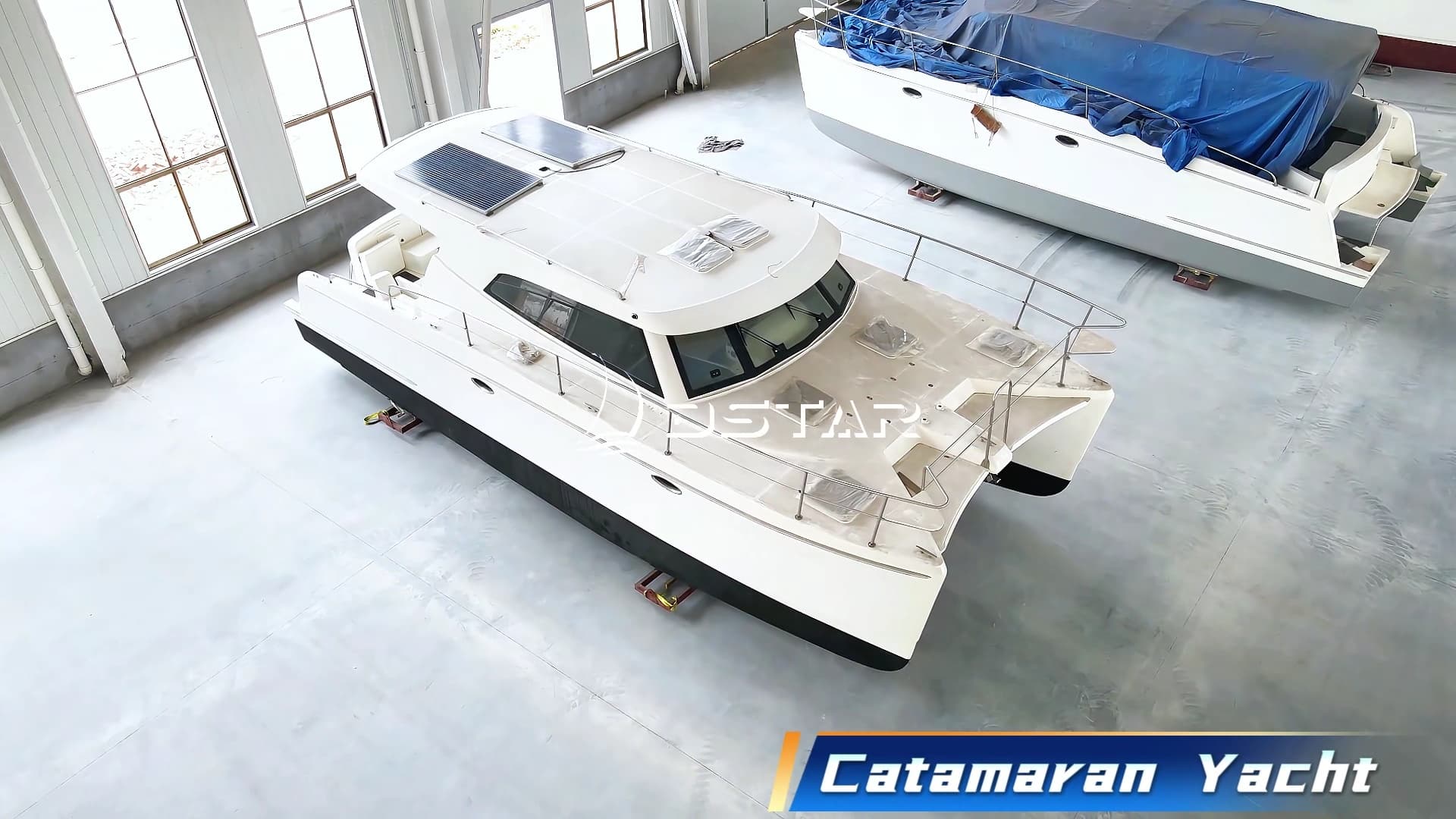
The catamaran – a vessel defined by its twin‑hull design – has long been valued for its stability, spacious deck area, and shallow draft. In recent years, however, the material choice driving much of the industry’s innovation has shifted decisively toward fiberglass‑reinforced plastic (FRP) and other composites. Lightweight, corrosion‑resistant, and increasingly cost‑effective, fiberglass catamarans are finding new roles far beyond the leisure market.
At Dookyu Crown Marine, we design and build a diverse range of vessels, including Aluminum Catamaran Boat, Aluminum Fire Boat, Aluminum Patrol Boat, Aluminum Luxury Yacht, Aluminum Pilot Boat, Aluminum Speed Boat, and Aluninum Fishing Boat. While aluminum remains our core expertise, we closely follow developments across all marine materials – and fiberglass catamarans represent one of the most dynamic segments in the industry today. In this article, we examine the fiberglass catamaran application prospects across passenger transport, recreation, commercial operations, and offshore industries, supported by the latest market data and real‑world trends.
The global catamaran market is experiencing sustained, robust growth. According to industry research, the catamaran market was valued at approximately $5.12 billion in 2025 and is projected to reach $9.82 billion by 2034, representing a compound annual growth rate (CAGR) of 7.49%. Other estimates place the market at $4.6 billion in 2025, with expectations to grow to $7.5 billion by 2032 at a CAGR of 7.3%. The market is forecast to grow by $585.7 million during 2025‑2030, accelerating at a CAGR of 6.2%.
Fiberglass, as a primary construction material, is a key beneficiary of this expansion. The global marine composites market – which includes fiberglass‑reinforced plastics – was valued at $3.86 billion in 2025 and is projected to reach $5.65 billion by 2034, growing at a CAGR of 4.3%. Glass fiber alone is expected to dominate the marine composites market with an anticipated share of 44.8% in 2026, driven by its cost‑effectiveness, corrosion resistance, and ease of processing.
H4: What’s Driving This Growth?
Several factors are fueling the fiberglass catamaran application prospects: rising consumer interest in recreational boating and luxury water travel experiences, the expansion of marine tourism in coastal and island regions, growing demand for stable and fuel‑efficient passenger vessels, and the increasing adoption of composite materials in commercial and offshore applications. Marina infrastructure development and the integration of smart navigation technologies are also contributing to the positive outlook.
The passenger transport catamaran future looks increasingly tied to fiberglass construction. Operators of commuter ferries, island hopping services, and tourist excursion boats are turning to fiberglass catamarans for several compelling reasons.
First, the lightweight nature of FRP construction allows for higher speeds with lower installed power. A fiberglass catamaran can achieve the same service speed as a steel or aluminum vessel while burning significantly less fuel – a direct benefit to route profitability and environmental footprint. Second, the material’s inherent corrosion resistance dramatically reduces maintenance frequency and cost while extending service life. Third, the smooth hull surface achievable with composite molding techniques reduces drag, further improving efficiency.
H4: Real‑World Examples
Commercial passenger catamaran builders are increasingly specifying fiberglass for new builds. Corinthian Catamarans, a Florida‑based builder, specializes in fiberglass motor catamarans for commercial passenger service, with vessels designed to meet U.S. Coast Guard requirements. In Europe, the Sportcat85 – an 8.5‑meter composite catamaran with capacity for up to 12 passengers – has been presented as a lightweight, durable solution for coastal passenger transport.
For operators looking at the passenger transport catamaran future, fiberglass offers the ideal balance of speed, comfort, durability, and operating economy.
The recreational catamaran market growth is one of the most significant trends in the marine industry. The Global Sail Catamarans Market is poised for significant growth, with an expected CAGR of 4.5% from 2025 to 2035, driven by rising consumer interest in recreational boating and luxury water travel experiences. The Sailing Catamaran Market is projected to grow from $5.03 billion in 2025 to $8 billion by 2035, with a CAGR of 4.8%.
Fiberglass is the material of choice for the vast majority of recreational catamarans. Its moldability allows for complex, hydrodynamic hull shapes that would be difficult or expensive to achieve in metal. Its weight savings – fiberglass hulls can be 20% lighter than traditional aluminum hulls – translate directly into better acceleration, higher top speeds, and lower fuel consumption. For charter operators, these efficiencies mean higher profitability and lower operating costs.
H4: Charter and Tourism Applications
The recreational catamaran market growth is closely linked to the expansion of charter services and marine tourism. Catamarans are increasingly the vessel of choice for day charters, week‑long cruising holidays, and corporate events. Their spacious decks, stable ride, and shallow draft make them ideal for exploring coastal areas, islands, and reefs that are inaccessible to deeper‑draft monohulls.
For private owners, fiberglass catamarans offer the combination of performance, comfort, and low maintenance that makes boating accessible and enjoyable. As disposable incomes rise and interest in water‑based leisure activities grows, the recreational catamaran market growth shows no signs of slowing.
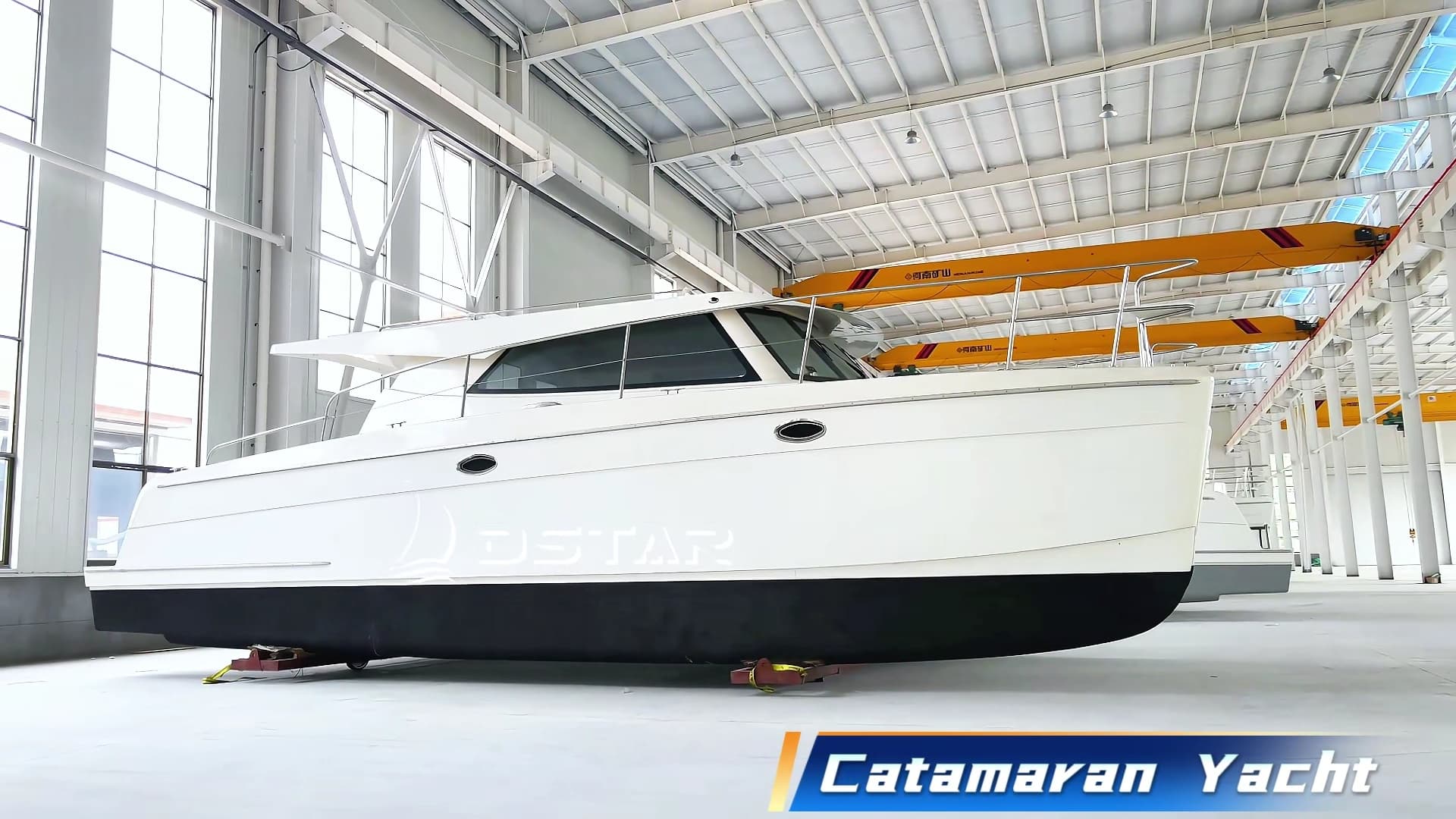
The commercial catamaran industry outlook is expanding well beyond passenger transport and recreation. Fiberglass catamarans are increasingly deployed in commercial fishing, oceanographic survey, and offshore support roles.
In commercial fishing, FRP catamarans offer exceptional stability – a critical factor when working in rough seas or hauling heavy nets. Their wide beam provides ample deck space for fishing gear and catch handling. One notable example is a 12.56‑meter FRP fishing catamaran built for a Canadian client, specifically designed for harvesting high‑value species such as king crab, cherry shrimp, and geoduck. This demonstrates the growing international demand for offshore composite vessel use in commercial fisheries.
H4: Offshore Wind and Survey Applications
The offshore renewable energy sector is another promising area for offshore composite vessel use. Composite catamarans are being designed specifically for wind farm support, with lightweight construction delivering excellent fuel efficiency and reconfigurable deck systems for maximum versatility. The Port of London Authority, for example, has commissioned FRP composite catamaran survey vessels built using vacuum resin‑infusion techniques, delivering smooth hull shapes and efficient passage.
Survey and research organizations also favor fiberglass catamarans for their stability, low magnetic signature (important for certain types of oceanographic equipment), and resistance to corrosion in harsh marine environments. These attributes position fiberglass catamarans as a growing force in the commercial catamaran industry outlook.
One of the most significant advantages of fiberglass catamarans is their weight. Fiberglass hulls can be 20% lighter than traditional aluminum hulls and even more compared to steel, improving speed and fuel efficiency. This weight reduction is not marginal – it is transformative.
A lighter vessel requires less power to achieve the same speed. This means smaller engines, lower fuel consumption, and extended range. The lightweight catamaran fuel savings are substantial: operational costs can be reduced by up to 25% compared to heavier vessels. For commercial operators, these savings directly improve route profitability.
The Efficiency Cycle
The benefits of lightweight construction are self‑reinforcing. Less weight means smaller engines are needed, which means less fuel needs to be carried, which further reduces weight. This efficiency cycle allows fiberglass catamarans to achieve impressive range and speed with modest power plants. For example, some lightweight power catamarans can cruise at 12 knots and reach maximum speeds of 23 knots with just two 80‑horsepower engines.
For operators considering the fiberglass catamaran application prospects, the fuel savings alone often justify the investment in composite construction.
Beyond weight savings, fiberglass offers outstanding resistance to saltwater, chemicals, and UV exposure. Unlike steel, it does not rust. Unlike wood, it does not rot. This dramatically reduces maintenance frequency and cost while extending service life. For commercial operators, this means more time in service and less time in the yard – a direct boost to revenue.
The combination of lightweight catamaran fuel savings and low maintenance makes fiberglass catamarans one of the most cost‑effective vessel types available today, whether for passenger transport, recreation, or commercial use.
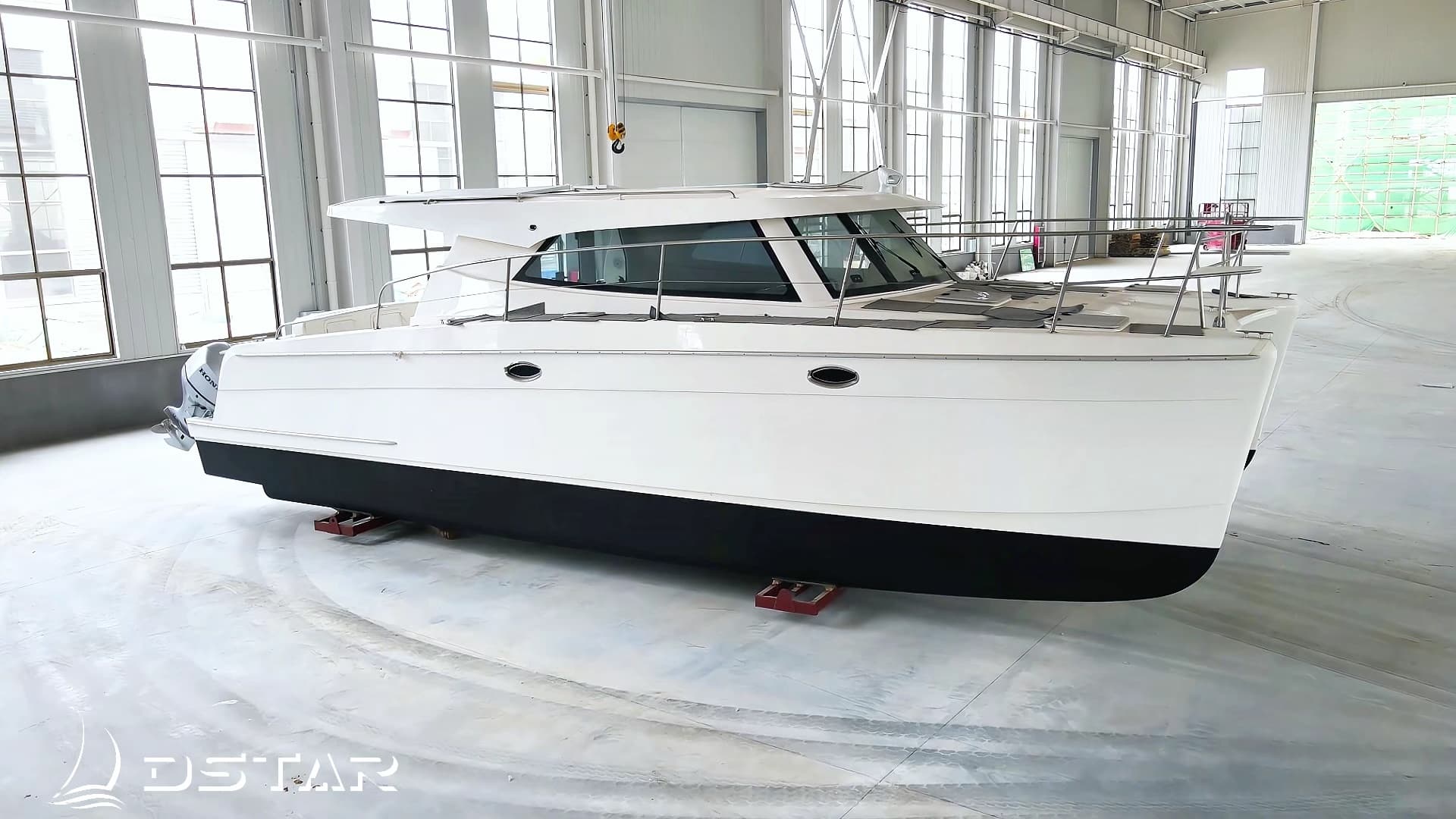
At Dookyu Crown Marine, we are committed to helping our customers navigate the full spectrum of marine construction options. While our core expertise lies in aluminum vessels – including Aluminum Catamaran Boat, Aluminum Fire Boat, Aluminum Patrol Boat, Aluminum Luxury Yacht, Aluminum Pilot Boat, Aluminum Speed Boat, and Aluninum Fishing Boat – we recognize that fiberglass catamarans offer distinct advantages for many applications.
Our team stays at the forefront of industry trends and material innovations, ensuring that we can provide informed guidance whether you are considering aluminum, steel, or fiberglass for your next vessel. We offer comprehensive one‑stop solutions – from design and engineering to construction, outfitting, sea trials, and export delivery – all built to international standards (CE, ISO, or classification society requirements).
The fiberglass catamaran application prospects are exceptionally strong across multiple sectors. The passenger transport catamaran future is being shaped by lightweight, fuel‑efficient composite designs. The recreational catamaran market growth continues to accelerate, driven by rising consumer demand for leisure and charter experiences. The commercial catamaran industry outlook is expanding into fishing, survey, and offshore energy support. And throughout all these applications, lightweight catamaran fuel savings and the durability of offshore composite vessel use make fiberglass an increasingly compelling choice.
Whether you are a ferry operator, a charter company, a commercial fisherman, or a private owner, fiberglass catamarans offer a combination of performance, efficiency, and value that is hard to beat.
Ready to explore your next catamaran project? Contact Dookyu Crown Marine today.
WhatsApp: +86 15166629468
Email: sales@dstaryacht.com
Website: www.dstaryacht.com


