

Views: 155 Author: Bruce Liu Publish Time: 2026-05-21 Origin: Site


Meta Description: The grid‑like frame in an aluminum barge is not an option – it is a structural necessity. Discover how aluminum alloy barge construction uses this design to achieve strength, light weight, and corrosion resistance. Learn more from a trusted custom aluminum alloy barge manufacturer that also builds Aluminum Patrol Boat, Aluminum Luxury Yacht, and more.
Date: May 21, 2026
If you have ever looked inside the hull of an aluminum alloy barge, you may have noticed a distinctive pattern: a grid of intersecting longitudinal and transverse members forming small, box‑like compartments. This is not decorative. It is a fundamental engineering solution that makes modern aluminum barges both strong and light enough for practical transport.
At Dookyu Crown Marine, we design and build a wide range of aluminum vessels, including barges for cargo, equipment, and passenger transport. In this article, we explain why a grid‑like frame is essential for the foundation compartments (the bottom structure) of an aluminum barge. We will also introduce seven key concepts that every buyer or operator should understand when evaluating aluminum alloy barge construction.
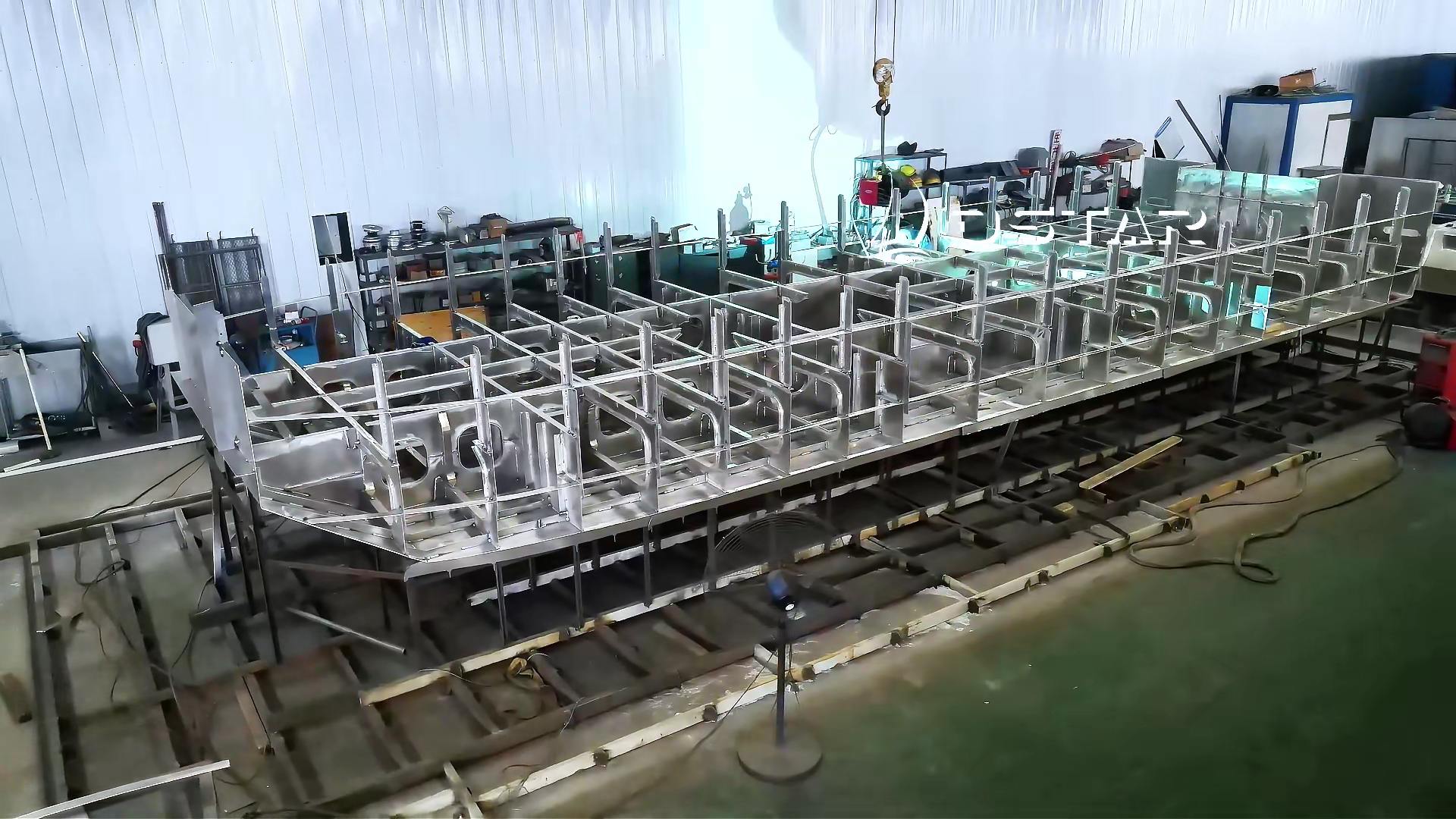
A beginner might ask: why not just use a solid, thick aluminum plate for the bottom? The answer lies in weight. Aluminum is lighter than steel, but it is not weightless. A solid bottom of sufficient thickness to resist grounding and cargo loads would be extremely heavy – defeating the purpose of choosing aluminum in the first place. It would also be prohibitively expensive.
Instead, aluminum alloy barge construction uses a grid‑like framing system. This consists of closely spaced longitudinal stringers and transverse floors that divide the bottom into small cells. The top of these cells is covered by a relatively thin skin plate. The result is a stiff, strong structure that uses material only where it is needed.
The grid frame acts like an I‑beam in two directions. When a heavy load – such as a container, a vehicle, or bulk cargo – rests on the deck, the forces travel down through the skin plate into the grid. The longitudinal members carry bending stresses along the length of the barge, while the transverse members prevent the bottom from "oil canning" (flexing excessively between supports). This efficient load distribution allows a lightweight aluminum barge for transport to carry impressive payloads without increasing overall weight.
H4: The Honeycomb Analogy
Think of a honeycomb. It is mostly empty space, yet it supports many times its own weight. The grid frame in an aluminum barge works on the same principle: material is arranged in a geometric pattern to maximize stiffness per unit of weight. This is why custom aluminum alloy barge manufacturer like Dookyu Crown Marine always specify a grid for the foundation compartments.
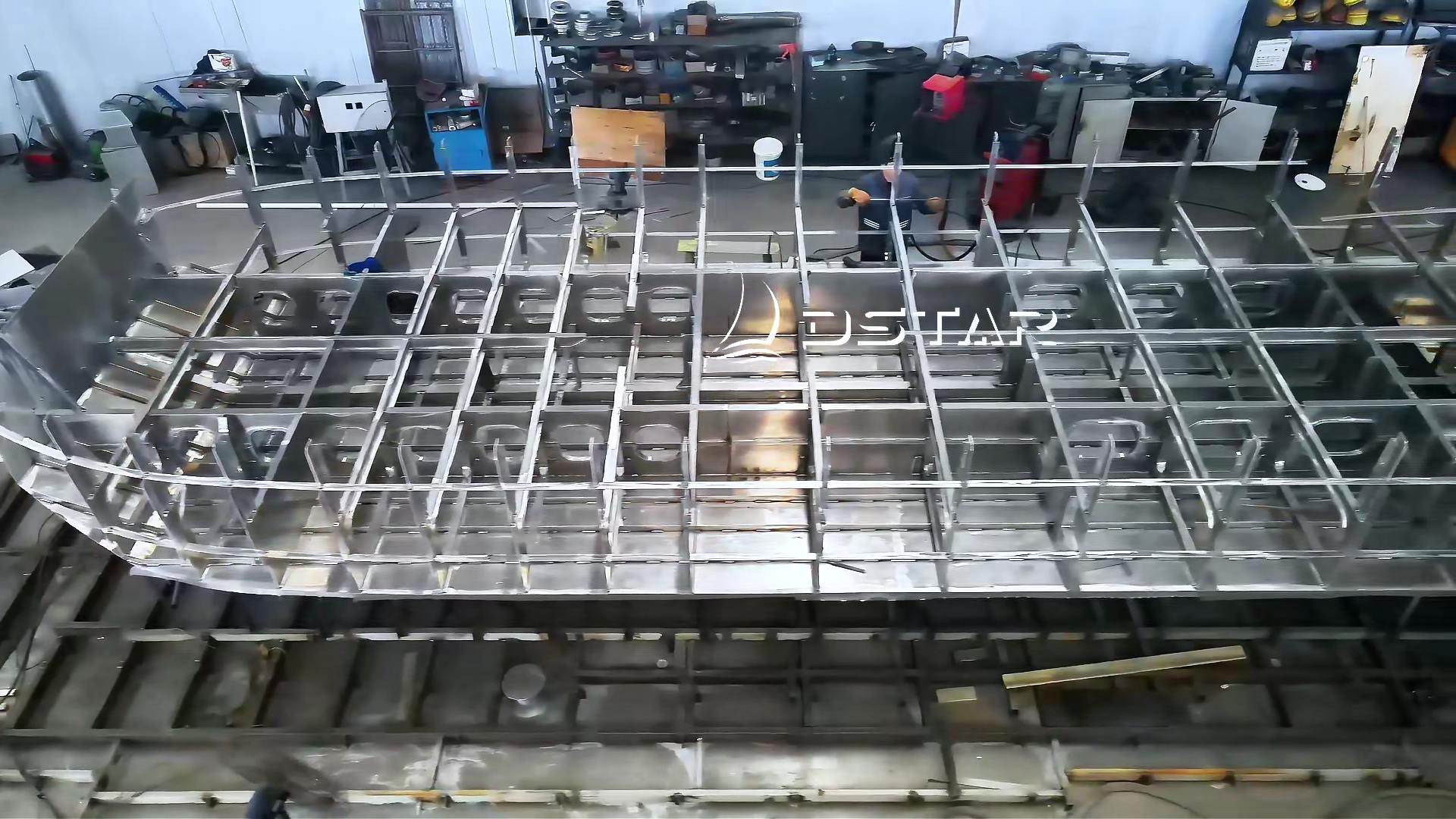
Barges experience constant, repeated loading and unloading. A solid plate bottom would gradually develop permanent "set" (sagging or hogging) over time. The grid frame resists this by providing multiple load paths. Even if one cell is overloaded, adjacent cells share the strain. This distributed resilience makes the barge suitable for decades of hard service.
When you compare aluminum barge vs steel barge, one advantage of aluminum is that it does not rust. However, aluminum can still suffer from fatigue cracking if the structure is not properly designed. The grid frame reduces stress concentrations by eliminating large, unsupported flat areas. This is a key reason why a corrosion resistant aluminum barge also needs a grid – not just for corrosion, but for long‑term fatigue life.
The grid‑like frame creates separate compartments that serve practical purposes. Each cell typically has a small drain hole (limber hole) to allow water to flow to a central sump. This prevents standing water from collecting against the hull bottom, which could accelerate crevice corrosion or freeze damage. Additionally, the open grid structure allows air circulation, keeping the bilge dry. This directly contributes to the low maintenance aluminum cargo barge profile – less time spent cleaning, drying, and repairing.
H4: Easy Inspection and Repair
Because the bottom is divided into small, accessible compartments, surveyors and maintenance crews can easily inspect each cell for cracks, pitting, or weld defects. If a repair is needed, it is localized to a single cell rather than requiring a large section of the bottom to be cut out. This repairability is a major selling point for any aluminum flat deck barge for sale.
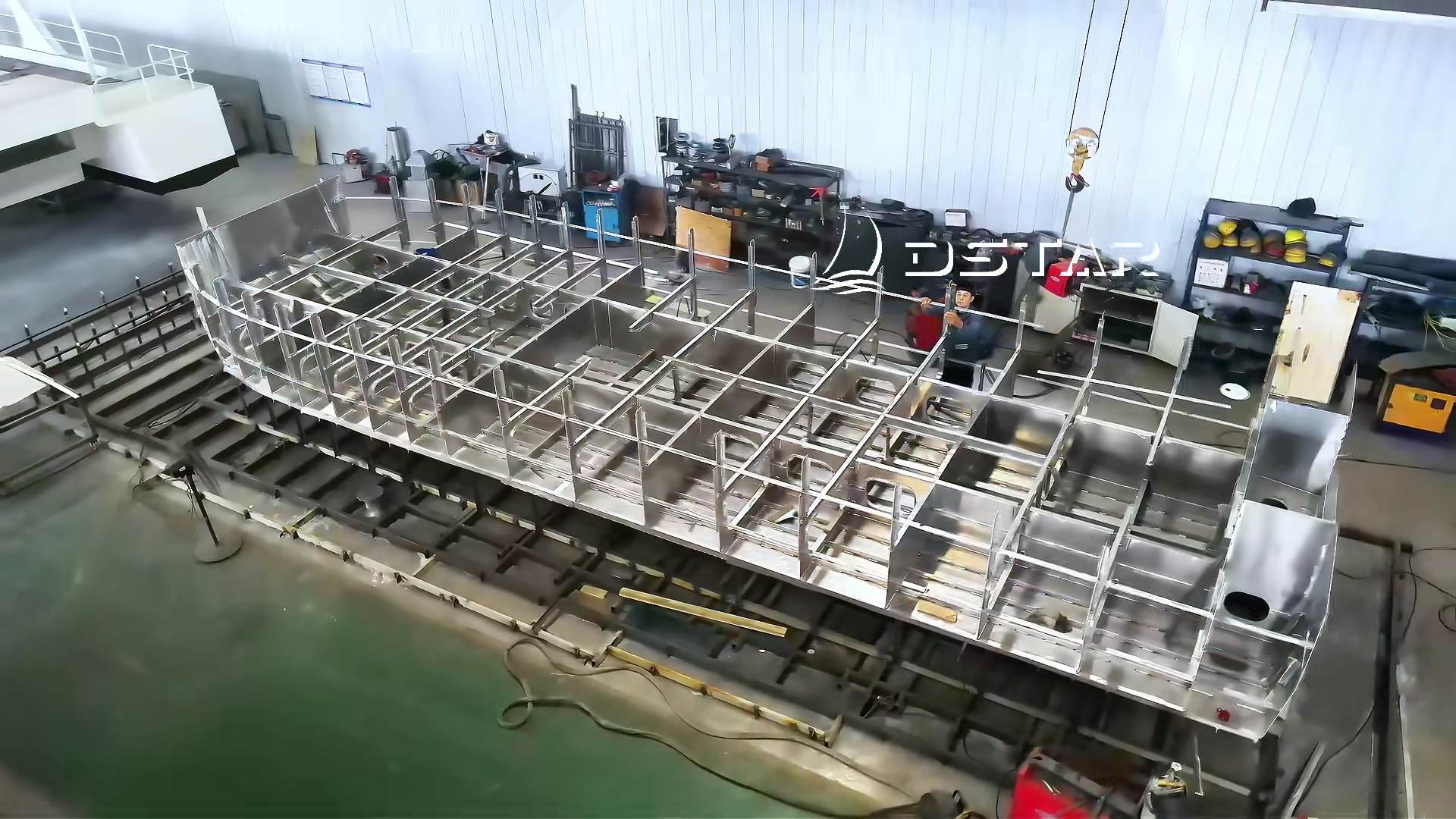
Building a grid frame in aluminum requires specialized techniques. Unlike steel, aluminum has a lower melting point and higher thermal conductivity, so welding must be precise. At Dookyu Crown Marine, we CNC‑cut the longitudinal and transverse members, then assemble them in a jig. The skin plate is welded to the top of the grid using intermittent fillet welds or continuous seams, depending on the design. This aluminum alloy barge construction method is labor‑intensive but yields an exceptionally strong, lightweight structure.
As a custom aluminum alloy barge manufacturer, we adjust the grid spacing, member size, and plate thickness based on the intended cargo, operating environment, and classification requirements. For example:
Heavy load barges – tighter grid spacing, thicker stringers.
Shallow water operations – shallower frame depth to reduce draft.
Tropical environments – additional limber holes and ventilation slots.
We also offer different deck finishes (anti‑skid, removable wooden decking, or rubber padding). All these options are built around the same fundamental grid‑frame architecture. That is why any aluminum flat deck barge for sale from a reputable builder will feature a well‑engineered grid.
When comparing aluminum barge vs steel barge, many buyers focus on weight and corrosion. But the frame design is also different. Steel barges often use a less dense frame because steel is stronger per unit volume. Aluminum, being less stiff, requires a more closely spaced grid to achieve equivalent strength. However, the total weight of the aluminum barge – including the grid – is still typically 40–50% lighter than a comparable steel barge. This weight saving translates into shallower draft, lower fuel consumption, and easier towing. For operators moving cargo on inland waterways or coastal routes, a lightweight aluminum barge for transport is a clear winner.
Dookyu Crown Marine has years of experience in aluminum alloy barge construction. We design each vessel with a grid‑frame foundation that meets or exceeds classification society rules (CE, ISO, or customer specified). Our barges are used for:
Transporting construction materials, aggregates, and containers.
Serving as floating platforms for equipment or events.
Supporting aquaculture and fishing operations.
Acting as ferry decks for passengers and vehicles.
All our barges are corrosion resistant aluminum barge designs, using marine‑grade 5083 or 5086 aluminum. They are built to be low maintenance aluminum cargo barge assets, requiring minimal upkeep beyond routine cleaning and anode inspection.
If you are searching for an aluminum flat deck barge for sale, Dookyu Crown Marine offers both standard designs and fully custom aluminum alloy barge manufacturer solutions. We handle everything from engineering drawings and welding to painting, outfitting, and delivery – including export shipping.
The grid‑like frame in the foundation compartments of an aluminum barge is not an extra feature; it is the core engineering solution that makes aluminum barges practical. It provides strength without excess weight, distributes loads efficiently, prevents deformation, allows drainage and ventilation, and simplifies inspection and repair. Whether you are comparing aluminum barge vs steel barge, seeking a lightweight aluminum barge for transport, or looking for a custom aluminum alloy barge manufacturer, understanding the grid frame will help you make an informed decision.
At Dookyu Crown Marine, we build every barge the right way – with a precision‑engineered grid that ensures safety, durability, and value for decades.
Ready to discuss your barge project? Contact us today.
WhatsApp: +86 15166629468
Email: sales@dstaryacht.com
Website: www.dstaryacht.com


