

Views: 0 Author: Site Editor Publish Time: 2026-10-21 Origin: Site


You are 30 miles offshore. The wind suddenly shifts, whitecaps begin to form, and your vessel starts a violent side-to-side roll. Coffee spills across the helm station. Heavy tackle boxes skid across the wet non-skid deck. Your crew turns pale as motion sickness sets in. This aggressive pendulum motion plagues traditional V-hull designs in confused seas.
Fortunately, twin hull architecture drastically alters this dynamic. By shifting buoyancy to the outer edges, a catamaran platform delivers uncompromising balance. Let us break down the exact hydrodynamics behind this stability and compare real-world performance metrics. This will help you decide which vessel architecture aligns perfectly with your maritime demands.
Key Takeaways
Physics of Stability: A twin hull design distributes buoyancy to extreme outer edges. This drastically reduces lateral roll and pitch compared to a single center of gravity.
Maximized Deck Space: Carrying the full beam width to the bow offers significantly more usable square footage for commercial payloads and offshore casting.
Versatile Performance: From rugged aluminum builds engineered for heavy impact to hybrid pontoon configurations, multihulls excel in both shallow drafts and heavy ocean swells.
Reduced Fatigue: A rock-solid deck translates directly to less physical exhaustion and better focus during extended offshore operations.
Water dynamics dictate vessel behavior. Stability is a measurable metric driven by weight distribution, metacentric height, and buoyancy. To understand why multihulls outperform traditional deep-V designs in rough conditions, we must look at the underlying engineering.
The fundamental difference lies in water displacement. A monohull features a continuous hull displacing water centrally. From an engineering standpoint, it acts much like a seesaw balancing on a single pivot point along the keel. When a wave strikes the side, the vessel relies on internal ballast and chine design to right itself. This inherently requires a steep degree of leaning before balance is restored.
A twin hull boat operates on a completely different structural paradigm. By separating displacement into two distinct outer demi-hulls, the vessel acts like a sturdy four-legged table. Buoyancy concentrates at the extreme outer edges of the beam. This wide stance creates a massive righting moment. When downward force hits one side, the opposing hull acts as an immediate counterweight. The deck remains parallel to the water surface.
One heavily documented flaw of a deep-V monohull is the snap roll. A boat rocks sharply to one side and aggressively snaps back. This rapid lateral acceleration is the primary catalyst for passenger discomfort.
Twin hull architecture neutralizes this phenomenon. The space between the hulls, known as the tunnel, traps a mixture of air and water as the boat moves forward. This compressed mixture acts as a natural pneumatic shock absorber. When a swell passes beneath, the dual hulls dampen the lateral energy. You experience a gentle, predictable motion rather than a violent snap.
Pitching refers to the up-and-down motion of the bow and stern. In heavy seas, a traditional monohull often experiences violent bow dips, sometimes plunging directly into an oncoming wave in a dangerous scenario known as stuffing the bow.
Dual-hull designs provide superior longitudinal stability. Buoyancy is distributed along two separate elongated planes. The narrow entry of each demi-hull slices cleanly through the wave rather than riding up and over it. This prevents the bow from dipping violently and ensures a exceptionally dry ride.
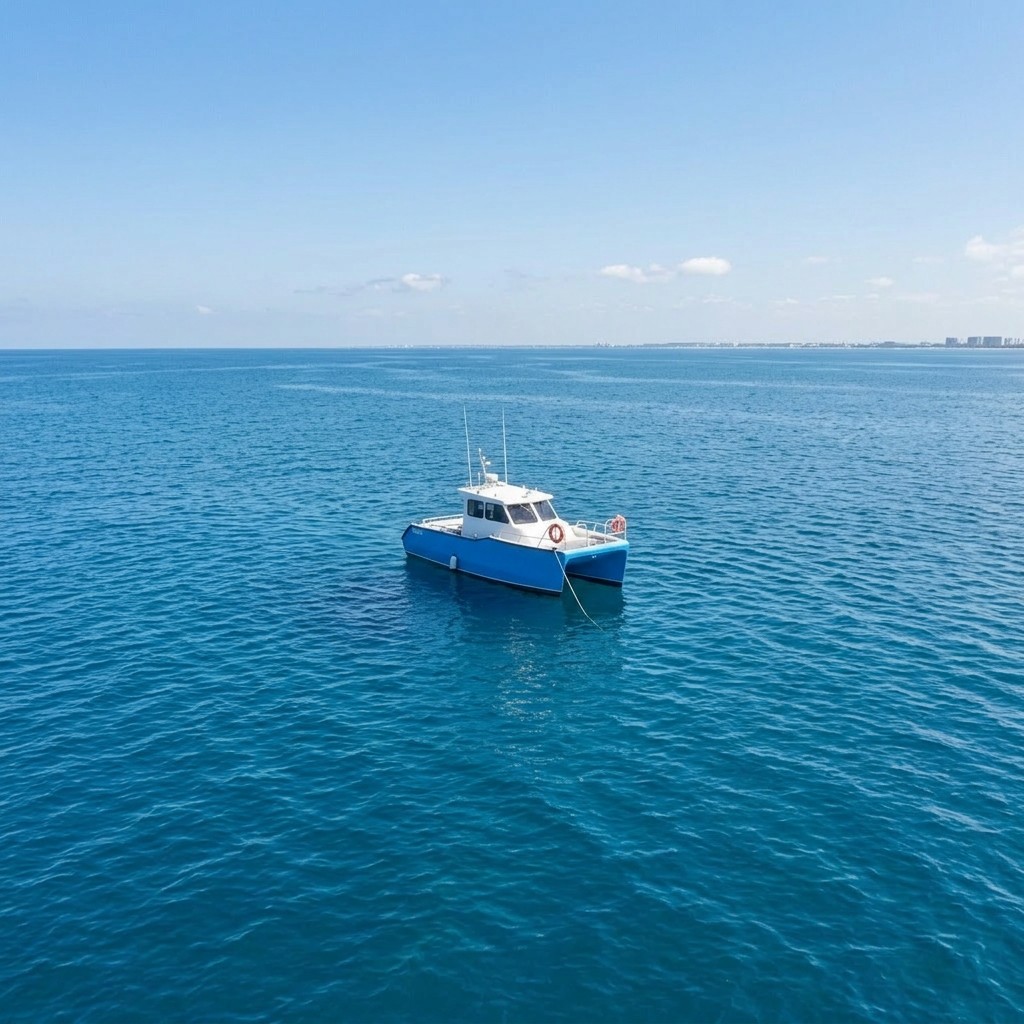
Moving beyond basic physics, field data from commercial operators and offshore anglers reveals distinct mechanical advantages. These functional benefits continuously push modern buyers toward multihull platforms.
Maintaining cruising speeds in adverse weather is crucial for marine professionals. Traditional V-hulls tend to pound against ocean chop, sending bone-jarring vibrations through the deck structure. A twin hull boat features ultra-narrow entry points. These sharp profiles divide wave energy rather than colliding with it head-on. This hydrodynamic efficiency allows the vessel to maintain a flat posture in confused seas.
Hydrodynamic drag directly impacts fuel consumption. A twin hull boat typically has less total wetted surface area than a monohull of comparable weight. Less wetted surface area equates to reduced drag. Because the hulls slice through the water and trap aerodynamic lift in the center tunnel, the vessel requires less horsepower to achieve planing speeds. This efficiency results in measurable fuel savings over long distances.
Monohulls naturally taper to a point at the bow. This creates a triangular footprint restricting usable space. A twin hull boat carries its full beam width almost entirely to the front deck. This rectangular footprint provides roughly 20 to 30 percent more usable square footage than a V-shaped monohull of the exact same length. You gain larger consoles, wider walkways, and greater payload capacity.
Despite a larger visual footprint, multihulls often feature a remarkably shallower draft. The weight of the vessel and engines is distributed across two separate hulls. Neither hull needs to sink deeply into the water to achieve necessary displacement. Operators can safely navigate coastal flats, tidal estuaries, and hidden sandbars that would ground a heavy deep-V.
For offshore operators, redundancy equals survival. Most twin hull vessels utilize dual engines mounted to independent transoms. These engines connect to completely independent fuel tanks and electrical systems. If one system fails fifty miles offshore, the vessel safely returns to port on the remaining system. Single-engine monohulls simply cannot match this operational security.
Recent marine industry analytics reveal a documented shift toward multihull platforms. Historically viewed as niche vessels for commercial ferries, power catamarans now capture a massive share of the recreational market. Coastal waters are becoming more crowded and wake-heavy. Boaters are prioritizing physical comfort and usable space.
Advancements in high-horsepower outboard technology pair perfectly with dual-hull hydrodynamics. Modern manufacturing techniques have also streamlined the production of complex tunnel designs. As demand for stable, high-capacity platforms grows, the industry is seeing a rapid expansion of catamaran lineups across both fiberglass and aluminum sectors.
The multihull market has diversified significantly. Marine engineers now design specific hull configurations to meet precise operational demands. Identifying the correct sub-category ensures maximum return on your investment.
Engineered for the serious offshore angler, this layout prioritizes stability and utility. The wide beam provides a true 360-degree fishable platform. Multiple anglers can fight large pelagic species from one side without causing the boat to list heavily. Take the 33ft Double Hull Fishing Catamaran as a prime example. It features deep gunwales, massive insulated fish boxes integrated into the hulls, and an elevated helm station for spotting weed lines. This setup provides the rock-solid casting platform needed to reduce fatigue during offshore tournaments.
When durability and low maintenance are your primary criteria, marine-grade metal is the superior choice. Fiberglass can spider-web upon heavy impact. Metal flexes and absorbs kinetic energy. This makes it highly resistant to rocky shorelines, submerged timber, and commercial rigors. Built with robust 5083 marine-grade aluminum, an Aluminum Catamaran Boat is significantly lighter than composite materials. This enhances fuel efficiency and towing ease while guaranteeing a lifetime of heavy-duty performance without expensive gel coat repairs.
Traditional flat-bottom pontoon boats struggle dangerously in coastal waters. Modern hybrids bridge this gap perfectly. By utilizing heavily reinforced, deep-V shaped demi-hulls instead of standard cylindrical tubes, a Catamaran Pontoon Boat offers the massive deck space of a traditional pontoon combined with the offshore capability of a power catamaran. It serves as the ultimate crossover vessel for families transitioning from inland lakes to choppy coastal bays.
Prospective buyers often ask if a multihull is strictly an offshore vessel. Empirical evidence shows exceptional performance in both environments. The mechanics of that performance simply adapt to different wave patterns.
Deep-sea environments feature long-period swells and multi-directional wave patterns. A twin hull boat excels here due to its high metacentric height. When navigating following seas where waves move in the same direction as the boat, dual hulls track exceptionally straight. This prevents dangerous bow steering or broaching that causes monohulls to spin out of control. Professional captains rely on this directional stability to navigate treacherous inlet currents.
Inland lakes present wind-driven, short-period chop. These steep, tightly packed waves cause modified-V monohulls to slam aggressively. A twin hull boat mitigates this by bridging the gap between wave crests. The dual hulls slice through tight chop simultaneously while the center tunnel allows wave crests to pass through without impacting the main deck.
Transitioning to a dual-hull platform is a major decision. User data and long-term owner testimonials reveal distinct physiological benefits driving this market shift.
Motion sickness triggers when visual input disconnects from the inner ear balance mechanism. The low-frequency lateral rolling of a monohull induces this exact sensory conflict. A twin hull boat drastically limits side-to-side roll. The deck remains remarkably flat even at rest. Owners consistently report that guests who previously suffered from debilitating seasickness can now spend full days on the water comfortably.
Riding in a boat requires constant micro-adjustments by the human body. On a rolling monohull, the crew must constantly flex core and leg muscles to stay upright. Over an eight-hour trip, this mechanical exertion causes severe exhaustion. The solid platform of a twin hull boat removes the need for constant physical compensation. Anglers return to the dock feeling refreshed and alert.
Making an informed purchasing decision requires examining objective realities. While twin hulls offer undeniable stability advantages, traditional monohulls hold specific benefits depending on your logistics.
| Feature | Monohull (Deep-V) | Twin Hull (Catamaran) |
|---|---|---|
| Stability at Rest | Prone to side-to-side rolling | Rock-solid, minimal lateral movement |
| Usable Deck Space | Tapers at the bow, limited front space | Rectangular footprint, 20-30% more space |
| Draft Depth | Deep draft, limits shallow water access | Shallow draft, excellent for coastal flats |
| Cabin Volume | Deep central cabin capabilities | Shallower central cabin due to tunnel clearance |
| Docking Width | Fits standard marina slips easily | Wide beam may require premium oversized slips |
Building a vessel with two distinct hulls requires more raw materials and complex engineering than pulling a standard V-hull from a single mold. Buyers should expect the initial purchase price of a twin hull vessel to be higher. However, twin hull vessels experience a much slower depreciation curve. They are highly sought after by commercial operators and retain resale value exceptionally well. Over a ten-year period, fuel savings from efficient hydrodynamics help offset the initial investment.
Practical ownership logistics matter. Most dual-hull designs utilize a dual-engine setup. Owners must budget for double the routine engine maintenance during annual services. Docking presents another reality. The wide stance resulting in legendary stability also creates a wider beam. A 26-foot catamaran may require a premium oversized slip or a T-head dock compared to a 26-foot monohull. Verify slip availability at your local marina before purchasing.
If your primary goal is maximizing exterior space for hauling gear or entertaining large groups, the twin hull design is unparalleled. Conversely, if you prioritize overnight accommodations, monohulls hold an advantage. The deep unified V-shape allows for a spacious lower cabin. Catamarans typically feature shallower central cabins or split accommodations located down inside the narrow sponsons due to tunnel clearance requirements.
Identifying that you want the stability of two hulls is only the first step. To ensure maximum return on your investment, align the boat design and material with your intended application.
Conduct a realistic assessment of how you will spend 80 percent of your time on the water. Dedicated offshore anglers need a center-console catamaran with high gunwales and maximum rod storage. If your weekends consist of navigating shallow bays and pulling up to sandbars, target a vessel prioritizing seating and shallow draft capabilities over heavy-duty fishing features.
Local environments dictate material choice. Fiberglass offers polished aesthetics for luxury cruising. However, if you operate near rocky coastlines, navigate floating debris, or run commercial transport, aluminum is the pragmatic choice. The structural integrity of 5083 marine-grade aluminum plate provides a level of impact durability that composite materials cannot replicate.
Hydrodynamic theory only conveys so much. The true test is physical operation. Intentionally schedule a sea trial on a day with adverse weather conditions. Driving a twin hull boat directly into a head sea and experiencing the absence of lateral roll firsthand validates the vessel engineering before you make a financial commitment.
Monohulls hold a strong place in boating history. Yet, when it comes to riding comfort and operational safety, a twin hull boat offers unmatched stability. The physics of spreading buoyancy to the outer edges simply cannot be beaten by a single pivot point. Whether you demand better fuel efficiency for offshore fishing or a sprawling flat deck for commercial payloads, upgrading to a multihull is a transformative experience. Ready to experience this stability firsthand? Explore the precision-engineered aluminum multihulls at Dstar Yacht to find a vessel architecture that perfectly aligns with your maritime lifestyle.
Yes, they offer superior safety margins in challenging offshore conditions. Utilizing a wide stance with independent points of buoyancy on the outer edges makes them highly resistant to capsizing. The dual-hull design also tracks much straighter in following seas, drastically reducing the risk of the bow violently veering off course.
This is a persistent myth stemming from high-speed, wind-powered racing sailboats, not motorized powerboats. Modern motorized twin hull vessels are incredibly difficult to flip. They possess a very low center of gravity, and heavy outboard engines act as anchoring weights. The air and water trapped in the tunnel create a stabilizing vacuum cushion.
The primary disadvantages involve upfront costs and docking logistics. Manufacturing two hulls requires more material and labor, increasing the initial purchase price. Additionally, the wider beam essential for their legendary stability means they often require wider, more expensive marina slips compared to monohulls of the same length.
They handle following seas exceptionally well. Because the two narrow hulls slice through the water rather than surfing on top of it, the vessel tracks straight. This directional stability prevents the boat from being pushed sideways down the face of a wave, eliminating the dangerous bow steering common in deep-V hulls.
Traditional flat-bottomed aluminum pontoons are strictly designed for protected lakes. However, a specifically engineered catamaran pontoon is entirely different. Built with deep, reinforced V-shaped outer hulls, structural cross-members, and high bridgedeck clearance, they safely and comfortably handle coastal waters and mild offshore ocean chop.
The surge is driven by a desire for low-maintenance durability. An aluminum catamaran combines unmatched hydrodynamic stability with the resilient properties of marine-grade metal. They do not suffer from fiberglass blistering, require zero gel coat polishing, and withstand impacts with docks or rocky beaches without structural failure.
While very small skiff catamarans can operate with a single central engine, the vast majority require two outboard engines. Transom-mounted dual engines provide incredible differential maneuverability allowing operators to spin the boat within its own footprint. Crucially, dual engines provide critical safety redundancy for offshore boaters.


