

Views: 0 Author: Site Editor Publish Time: 2026-09-19 Origin: Site


Operating in offshore environments presents a high-stakes challenge where extreme weather, strict schedules, and passenger safety intersect. Commercial operators must balance upfront capital expenditure with long-term operational efficiency. You need a vessel that minimizes downtime, maximizes payload, and withstands continuous punishment from harsh sea states. Every structural decision directly impacts your operational uptime and the safety of your passengers.
While various hull forms and materials exist, the Aluminum Catamaran Boat has emerged as the definitive standard for offshore passenger transport. Twin-hull designs offer massive transverse stability without relying on complex active stabilization systems. Marine-grade aluminum provides exceptional impact resistance and field repairability that fiberglass simply cannot match. Together, they create a platform capable of handling grueling commercial schedules. This guide breaks down the technical criteria, structural trade-offs, and regulatory requirements necessary to specify and procure the right vessel for your commercial route.
Hull Design Dictates Viability: The choice between symmetrical, asymmetrical, and foil-assisted hull designs directly impacts seakeeping ability, passenger comfort, and fuel efficiency in specific offshore conditions.
Material Superiority for Commercial Use: Marine-grade aluminum provides unmatched impact resistance, structural longevity, and weight-to-strength ratios compared to fiberglass, directly lowering long-term lifecycle expenses.
Compliance is Foundational, Not Optional: Regulatory frameworks (e.g., USCG, Bureau Veritas, MCA) dictate structural fire protection and damage stability requirements that must be integrated into the initial design phase.
Proactive Risk Mitigation: Successful deployment requires rigorous oversight during the shipyard build and strict protocols for mitigating galvanic corrosion once operational.
You must analyze historical wave height, frequency, and prevailing weather patterns of the intended route before drafting any vessel specifications. Offshore conditions rarely forgive under-designed vessels. Short, steep wave periods in coastal bays demand completely different bow entries than long, rolling ocean swells found in open water. Establish acceptable thresholds for vessel pitch and roll to mitigate seasickness and ensure passenger comfort. High-frequency slamming leads to structural metal fatigue and miserable passengers, which directly hurts ticket sales and route reputation.
Account for extreme climate variables based on your geographic location. Operating in Alaskan or high-latitude waters dictates specific structural requirements that go far beyond standard builds. You must specify reinforced bows, thicker hull plating, and internal ice framing to handle impacts with surface ice. Enclosed heated helms and specialized cold-weather HVAC systems become mandatory for crew endurance. Window defrosters, heated exterior decks to prevent ice accumulation, and heavily insulated bulkheads keep the crew effective and passengers safe. Define your operational limits clearly. You must maintain schedule reliability without compromising safety during heavy weather events, knowing exactly when the sea state exceeds the vessel's safe operating parameters.
Calculate the optimal passenger-to-weight ratio for your specific commercial catamaran design. Passengers bring luggage, cargo, and variable weights that fluctuate by season. Overloading a catamaran drastically reduces its bridge deck clearance—the distance between the water surface and the underside of the tunnel connecting the hulls. Reduced clearance leads to severe tunnel slamming in rough seas, which can damage the vessel and terrify passengers. Determine the required cruising speed to meet timetable obligations, as speed dictates the entire propulsion package and hull shape.
Follow these steps to accurately calculate your required payload capacity during the design phase:
Calculate total passenger weight assuming maximum capacity, factoring in heavy winter clothing if operating in cold climates.
Add the maximum expected cargo and passenger luggage payload.
Factor in the weight of fully loaded fuel tanks, freshwater tanks, and black water holding tanks.
Include the weight of all required safety gear, life rafts, and crew equipment.
Determine the resulting bridge deck clearance at full load to ensure it exceeds the maximum expected wave heights on your route.
Model the trade-off between higher transit speeds and exponential increases in fuel consumption. Pushing a vessel past its natural hull speed requires massive horsepower. Larger engines require more fuel capacity to maintain the same range. More fuel adds significant weight, which increases the vessel's draft and wetted surface area, further increasing drag. You must find the precise operational sweet spot. Balancing speed, payload, and fuel burn ensures long-term route profitability without overstressing the mechanical systems.
Evaluate yield strength through the lens of destructive testing and real-world impacts. Marine-grade aluminum, specifically 5083-H116 and 5086-H112 alloys, possesses incredibly high tensile strength and ductility. Unlike fiberglass or composite materials which shatter, crack, or delaminate upon heavy impact, aluminum deforms. It absorbs kinetic energy effectively by bending rather than breaking. This makes it vastly superior for surviving collisions with floating debris, submerged logs, shipping containers, or ice. A dented aluminum hull gets you back to port safely. A cracked fiberglass hull invites catastrophic flooding and immediate emergency protocols.
Analyze the lifecycle benefits of metal construction. Aluminum requires no expensive molds or tooling. This lowers custom build costs significantly and allows naval architects to tweak hull dimensions without financial penalties. It remains highly repairable in remote commercial ports using standard MIG or TIG welding equipment. You do not need climate-controlled facilities, specialized resins, or vacuum-bagging equipment to patch an aluminum hull. A competent marine welder can cut out a damaged plate and weld in a new section in a matter of hours, getting the vessel back on its revenue-generating route.
| Evaluation Metric | Marine-Grade Aluminum (5000 Series) | Solid Fiberglass / Composites (FRP) |
|---|---|---|
| Impact Resistance | High ductility. Deforms and absorbs energy. Highly puncture resistant against debris. | Brittle under heavy impact. Shatters, cracks, or suffers internal delamination. |
| Customization & Build Flexibility | Excellent. No molds required. Easy to modify dimensions during or after the build. | Poor. Requires expensive custom molds. Changes require entirely new tooling. |
| Field Repairability | Excellent. Can be cut and welded in remote ports in open air environments. | Poor. Requires dry, climate-controlled environments and specialized curing times. |
| Long-Term Hull Aging | No osmosis risk. Forms protective oxide layer. Requires monitoring for metal fatigue. | Prone to hull blistering, water intrusion, and core rot over multiple decades. |
| Weight-to-Strength Ratio | Very high. Lighter overall hull weight allows for more payload or smaller engines. | Lower. Requires thick, heavy layups to achieve similar structural rigidity. |
Understand how commercial boats age over decades of continuous use. Aluminum completely eliminates the risk of hull osmosis, water intrusion, and fiberglass blistering. Operators must still monitor high-stress joints, engine beds, and bulkhead intersections for metal fatigue over a multi-decade lifespan. Assess the weight savings of aluminum construction. Lighter vessels translate directly to higher payload capacity or reduced fuel burn. Less weight means less wetted surface area, improving overall hydrodynamic efficiency and allowing the vessel to achieve planing speeds with less horsepower.
Examine the inherent transverse stability of the catamaran platform. The wide footprint provides massive initial stability, meaning the vessel resists rolling from side to side. This eliminates the need for complex, heavy, and maintenance-heavy active stabilization systems like gyro stabilizers or active fins. Highlight the spatial advantages of the twin-hull layout. A wider beam allows for high-density, comfortable passenger cabin layouts. You can fit more seats, wider aisles, larger viewing windows, and ADA-compliant restrooms without making the vessel top-heavy or compromising its center of gravity.
Detail the safety factor of complete mechanical redundancy. A twin-hull design provides duplicate, isolated engine rooms, fuel systems, electrical generation, and steering components. If one engine fails or a fuel line clogs, the vessel maintains propulsion and steering from the completely independent system in the other hull. Leverage expeditionary customization. The dual-hull aluminum structure allows for easy post-build modifications. You can weld custom boarding ramps, heavy cargo tie-downs, specialized dive platforms, or crane mounts directly to the deck. These additions integrate seamlessly into the existing framework without compromising the foundational structural integrity.
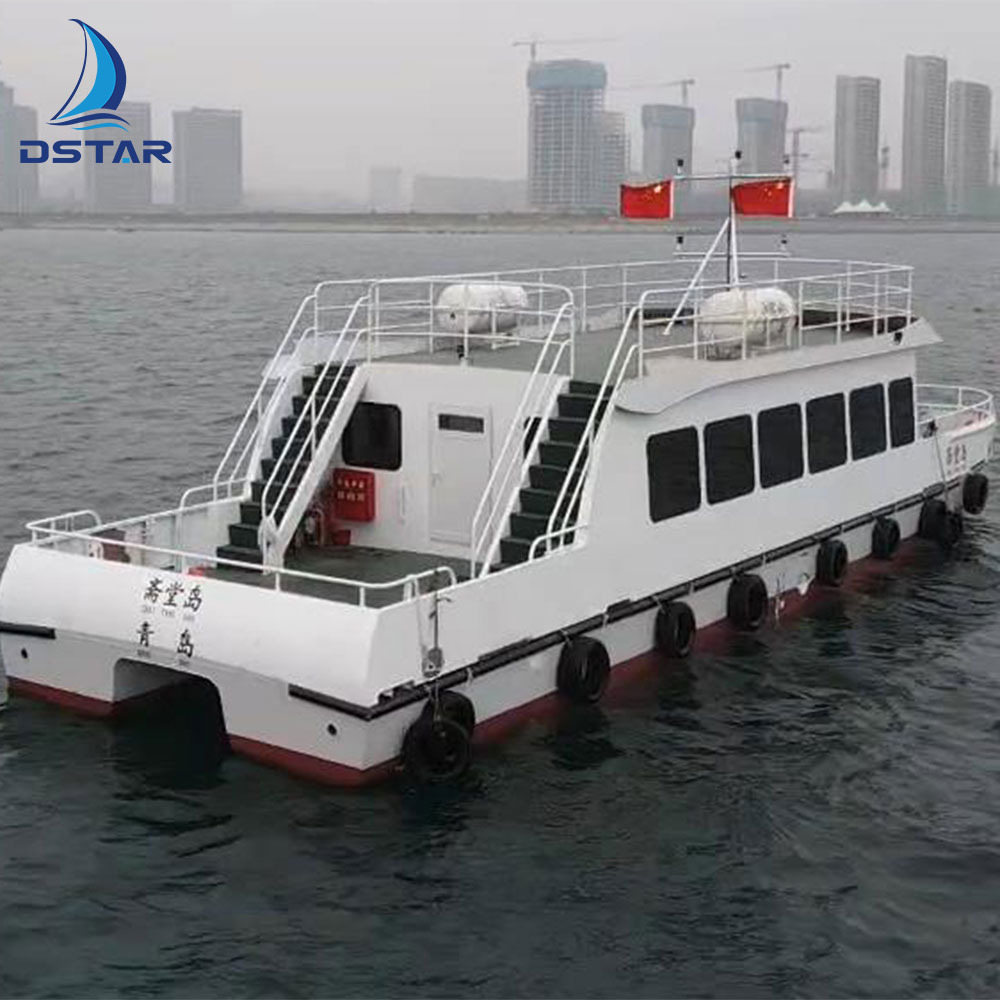
Compare symmetrical hulls against asymmetrical hulls when defining your aluminum passenger ferry specifications. Symmetrical hulls feature identical shapes on both the inboard and outboard sides of each sponson. They offer better load-carrying capacity, higher displacement, and highly predictable handling in following seas. Asymmetrical hulls feature a flatter inner face inside the tunnel. This design reduces wave interference and water buildup between the sponsons. It lowers hydrodynamic drag and improves top-end speed, but it sacrifices some load capacity and can handle differently in quartering seas.
Evaluate foil-assisted catamaran technology for your specific route. Hydrofoils span the tunnel between the two hulls. They generate hydrodynamic lift as vessel speed increases, raising the hull slightly out of the water. This drastically reduces wetted surface area and drag. Determine if the upfront capital expenditure is justified. Foil systems reduce fuel consumption and smooth out the ride in choppy conditions by flying over the chop. However, they add draft, increase the risk of damage from submerged debris, and require specific maintenance protocols. Analyze your route distance and average sea state to see if these operational fuel savings make sense for your operation.
Weigh inboard diesel engines against high-horsepower commercial outboards. Inboard diesels offer incredible longevity, high torque, and the ability to swing large propellers. They handle heavy-duty continuous commercial cycles perfectly. Shaft drives or waterjets pair well with inboards for offshore reliability, with waterjets offering shallow draft and excellent maneuverability. Commercial outboards provide ease of replacement and lower draft. You can swap a blown outboard powerhead in hours, minimizing vessel downtime. Outboards are ideal for 30-40’ coastal transport vessels, but they lack the torque required for massive 100-plus passenger ferries.
Analyze the integration feasibility of hybrid-electric propulsion systems. Environmental regulations continue to tighten globally, especially in protected marine sanctuaries. Hybrid systems suit operators working in eco-sensitive zones or harbors with strict emission and noise laws. Battery banks add significant weight. You must factor this massive weight penalty into the initial hull design and displacement calculations. Hybrid setups allow silent, zero-emission maneuvering near docks and through protected waters, while traditional diesel generators take over for high-speed, long-distance offshore transits.
Determine the optimal seating density for your route duration. You want to maximize revenue without violating egress regulations or making the journey miserable. Never compromise comfort on extended offshore transits. Tight, rigid seating works for a 20-minute harbor crossing. It fails miserably on a three-hour offshore run in heavy swells. Ensure adequate seat pitch, wide aisles for crew movement, and easy access to emergency exits. Select marine-grade seating with proper suspension to absorb hull impacts.
Optimize secure storage solutions for passenger luggage and commercial cargo. Shifting cargo in heavy seas causes severe stability issues and damages the interior. Ensure weight distribution remains balanced across both hulls for extended trips. Specify requirements for marine HVAC systems, noise dampening, and vibration isolation. Aluminum transmits sound and vibration easily from the engine room to the cabin. These isolation measures are critical when operating a rigid passenger transport boat. Use floating floors, flexible engine mounts, and heavy acoustic insulation in the engine rooms to keep cabin decibel levels acceptable.
Outline the strict intact and damage stability criteria required by maritime law. A passenger vessel operating offshore must survive specific flooding scenarios without capsizing. Naval architects calculate cross-flooding arrangements and watertight bulkhead placements based on these regulations. The vessel must remain upright and stable even if one or more compartments breach due to a collision. You cannot retrofit these stability requirements into an existing hull. They must govern the initial hull design, dictating the exact placement of bulkheads and the volume of the sponsons.
Address the specific structural fire protection requirements for aluminum vessels. Aluminum loses its structural integrity at lower temperatures than steel. It melts at roughly 660°C, whereas steel holds up past 1400°C. You must install A-60 class ceramic wool insulation in engine rooms and high-risk areas. This insulation prevents structural failure during a fire, giving passengers time to evacuate and crew time to extinguish the blaze. Detail the process of working with classification societies. Engage entities like the USCG, ABS, or DNV early. Keep them involved from the naval architecture phase through the final sea trials to avoid costly compliance failures.
Design the initial vessel with modularity in mind. This allows for future upgrades as your route demands grow or seasonal requirements shift. Use modular seating tracks bolted to the deck rather than welding seats permanently. You can reconfigure the cabin layout from high-density passenger transport to a mixed cargo setup overnight. Plan for additional electrical capacity in the main distribution panels to handle future navigation electronics, upgraded HVAC systems, or new passenger amenities without requiring a total rewiring job.
Standardize helm layouts, propulsion systems, and maintenance protocols. This streamlines crew training across multiple catamaran ferry boat units in your fleet. When captains move between vessels, identical bridge layouts reduce operator error during high-stress docking maneuvers or emergencies. Standardized engine packages simplify your spare parts inventory. You only need to stock one type of oil filter, raw water impeller, and alternator belt. This drastically reduces maintenance downtime, lowers inventory holding costs, and eliminates logistical headaches for your engineering team.
Establish strict criteria for vetting shipyards before signing any build contracts. Require a proven track record specifically in commercial aluminum offshore builds. Do not rely on builders who only produce recreational yachts or light-duty charter vessels. Commercial builds require heavier scantlings, different welding procedures, and strict adherence to classification society rules. Ask for references from current commercial operators and physically inspect vessels they built five to ten years ago to see how their welds hold up to commercial abuse.
Mandate the use of independent marine surveyors and owner's representatives. They must monitor welding quality, material certification, and milestone compliance during construction. Aluminum welding requires extreme precision and clean environments. Porosity in the welds, caused by drafty conditions or contaminated shielding gas, leads to hidden structural failures. Your representative ensures the shipyard follows the approved naval architecture plans exactly, uses the correct alloy grades, and performs non-destructive testing on critical joints. Never skip independent oversight to save money upfront.
Acknowledge the primary vulnerability of aluminum in saltwater environments. Electrolysis and galvanic corrosion can destroy a hull rapidly if ignored. When dissimilar metals interact in an electrolyte like saltwater, the less noble metal (the aluminum hull) corrodes to protect the more noble metal (bronze propellers or stainless steel shafts). Stray electrical currents from poorly wired marinas or onboard electrical faults accelerate this process exponentially. A brand-new hull can suffer severe pitting in a matter of months if left unprotected.
Detail strict mitigation strategies to protect your asset. Ensure proper electrical isolation across all onboard systems. Use isolation transformers for all shore power connections to block stray marina currents. Strategically place sacrificial anodes (zinc for saltwater, aluminum/magnesium for brackish/freshwater) on the hull and inspect them regularly. Apply specialized marine barrier coatings below the waterline. Never use copper-based antifouling paint on an aluminum hull, as the copper will aggressively attack the aluminum. Outline a preventative maintenance schedule tailored to high-hour offshore commercial operations. Regular hull inspections, electrical bonding checks, and anode replacements are mandatory.
An aluminum catamaran boat offers the most reliable, efficient, and durable platform for offshore passenger transport. The hull design, material thickness, and propulsion systems must strictly match the route's sea state and payload demands. Operators should prioritize naval architects and shipyards with verified commercial offshore experience. Heavily scrutinize classification compliance early in the design phase to avoid delays. Base your procurement decisions on long-term operational efficiency, fuel burn rates, and maintenance requirements rather than just the initial build price.
Take the following actionable steps to begin your procurement process:
Compile your historical route data, including average wave heights, weather patterns, and total transit distance.
Define your exact passenger capacity, seating density, and cargo payload requirements for peak season operations.
Identify all local and international regulatory obligations for your specific operating zone and passenger count.
Consult with a specialized commercial naval architect to draft preliminary specifications and general arrangement drawings.
Solicit and compare bids from shipyards with proven, verifiable experience in commercial aluminum catamaran construction.
A: A well-maintained commercial aluminum catamaran easily operates for 30 to 40 years. The longevity depends heavily on strict adherence to maintenance schedules, proper mitigation of galvanic corrosion, and regular inspections of high-stress structural joints for metal fatigue. Unlike fiberglass, the hull material itself does not degrade from water exposure.
A: A catamaran provides superior transverse stability, drastically reducing the side-to-side roll that causes seasickness. The twin hulls slice through waves rather than riding over them, offering a smoother ride. However, operators must monitor bridge deck clearance to prevent the tunnel from slamming in steep, short wave periods.
A: Aluminum does not suffer from osmosis, water intrusion, or core rot, which commonly plague aging fiberglass hulls. Aluminum oxidizes, forming a hard protective layer. The primary aging concern for aluminum is metal fatigue at weld joints and potential galvanic corrosion if electrical systems and anodes are neglected.
A: Fuel consumption varies drastically based on hull design, total weight, and cruising speed. Generally, a 100-passenger vessel cruising at 25 knots with twin inboard diesels may burn between 40 to 80 gallons per hour. Foil-assisted designs can reduce this consumption by 15% to 30% by reducing hydrodynamic drag.
A: It is highly straightforward. Aluminum deforms upon impact rather than shattering. Damaged sections can be cut out and patched using standard MIG or TIG welding equipment. This can often be done in remote commercial ports without the need for specialized, climate-controlled fiberglass repair facilities.
A: Aluminum loses its structural integrity and melts at much lower temperatures than steel, typically around 660°C. Therefore, maritime regulations require strict fire protection measures, such as A-60 class ceramic insulation in engine rooms, to prevent the hull from failing before passengers can safely evacuate.


