

Views: 0 Author: Site Editor Publish Time: 2026-11-11 Origin: Site


A 24 metre length overall is one of the first figures quoted in almost every workboat enquiry. It is useful for berthing arrangements, for road transport studies and for comparing one design against another on paper. It is not the figure that decides whether a vessel sits inside the small vessel regime for load line purposes. For WB3 the deciding measurement is Load Line Length, and Load Line Length is defined in Regulation 3 by a method that can return a figure shorter than LOA, longer than LOA, or the same, depending entirely on the geometry of the hull.
That single point causes more confusion in early project discussion than any other part of the load line rules. A specification sheet says 24 metres, a broker repeats 24 metres, and the assumption is made that the boundary test has been answered. It has not. The boundary test has to be answered by measurement, on the hull that will actually be built.
Regulation 3 defines L as the greater of two measurements taken on the same waterline. The first is 96 percent of the total length on a waterline at 85 percent of the least moulded depth measured from the top of the keel. The second is the length from the fore side of the stem to the axis of the rudder stock on that same waterline. Where one of the two is the greater, that is the length that is used.
Read that again slowly, because three details sit inside it. There are two candidate measurements, not one. Both are taken on a single defined waterline, not on the design waterline. And the answer is the greater of the two, not an average and not the smaller figure. A hull can measure 23.4 metres by the 96 percent method and 24.3 metres to the rudder stock axis on the same waterline, and in that case the governing figure is 24.3 metres, whatever the LOA happens to say.
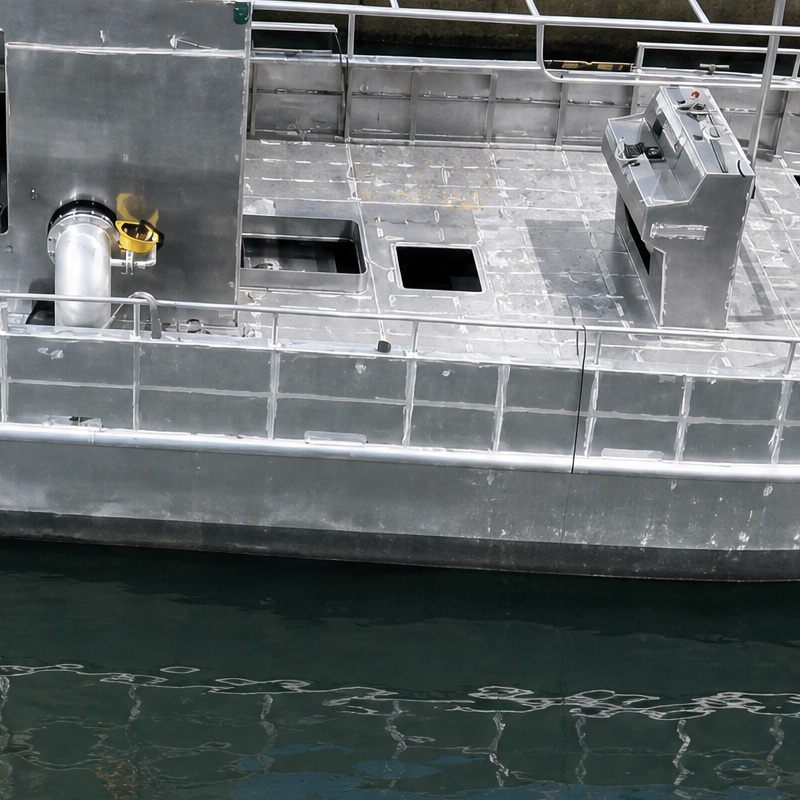
The waterline used for the calculation is not the loaded waterline and not the design waterline of the vessel in service. It sits at 85 percent of the least moulded depth, measured from the top of the keel. The word least does the work here. On a hull with a stepped keel or a rising forefoot, the least moulded depth may occur well forward or well aft of midships rather than at the lowest point of the profile, and that location fixes the height at which the length is taken.
On a hull with flare, a cut away forefoot or a pronounced sheer, a small vertical change in the measuring waterline can change the horizontal length that is measured on it by a meaningful amount. This is why two vessels with almost identical LOA can land on opposite sides of the boundary, and why an estimate made from a principal dimensions table is not a substitute for the calculation.
A plain hull with a raked stem and a conventional rudder is the easy case. Most working hulls are not the easy case. Where there is no rudder stock, the second measurement cannot simply be ignored or replaced with the transom; the official rule sets out how the length is to be established in that situation, and the treatment has to follow the rule as written rather than an assumption made at the drawing board.
Concave bows, bar keels, cut outs, hull extensions and steps each need to be handled on their own terms. A bow that is concave in profile does not present a simple stem line, so the forward end point of the measurement has to be established through the rule rather than by eye. A bar keel changes the bottom reference from which moulded depth is taken, which moves the 85 percent waterline. A cut out in the profile, a hull extension at the stern and a step in the keel line all change either the waterline that is used or the points between which the length is measured. None of these features is unusual on a working vessel; all of them have to be read against the rule.
Some working craft are designed with bow or stern sections that can be removed for transport, for dry docking or for a particular duty. The rule does not treat such geometry as irrelevant by default. Where a section is fixed in place during normal operation, it may be counted in the length. The test is how the vessel is actually configured and operated, not whether a joint exists in the structure.
A section that is fitted only for a delivery passage and taken off in service stands in a different position from a section that is bolted, welded or otherwise secured for every working day of the vessel life. The way the section is secured, the way it is documented and the way the vessel is operated all bear on the question, and they are questions for the Certifying Authority rather than for the sales conversation.
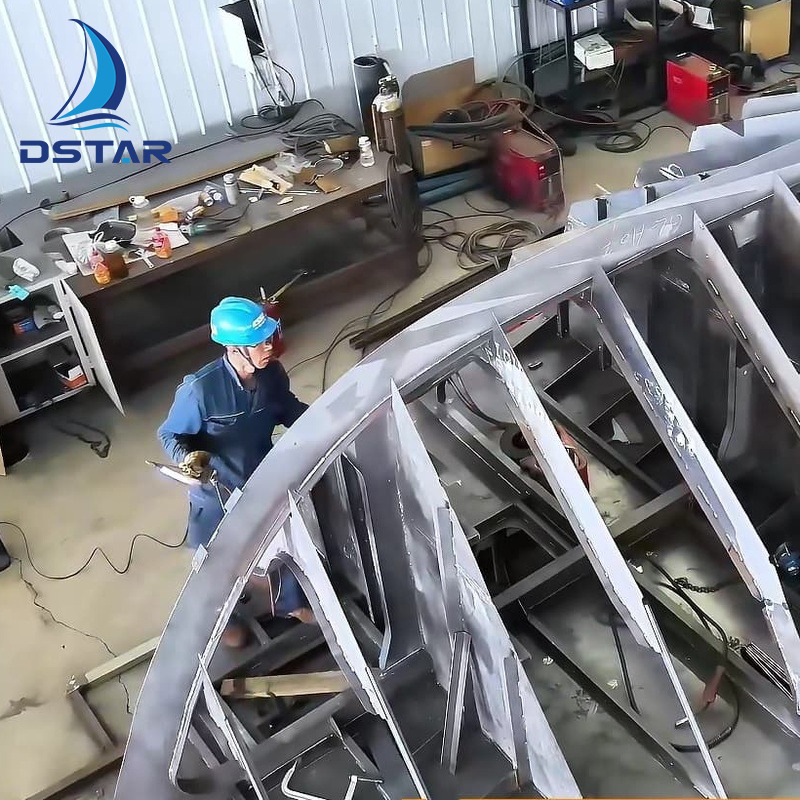
The measurement is not settled by a builder opinion, a broker note or a line on a specification sheet. The final determination rests with the Certifying Authority that the owner selects, working from the drawings of the actual vessel. Drawings, not photographs and not a table of principal dimensions, are what the authority needs in order to make a decision that will stand.
That division of responsibility is worth stating plainly. A designer can prepare the geometry, a builder can build to the approved drawings, and an owner can arrange the review. None of those parties issues the determination, and none of them can promise the outcome before the review has been completed. Any statement that a particular hull will be accepted is a prediction, not a decision.
A design file that supports a clean decision normally contains the lines plan with profile and body plan, the general arrangement, the structural drawings showing the keel, the stem and any steps or cut outs, the rudder arrangement including the position of the rudder stock axis, details of any detachable bow and stern sections with the way they are secured in service, and a statement of the moulded depth with the location at which the least moulded depth occurs.
A drawing set that is internally consistent is assessed faster than one that leaves the reviewer to reconstruct geometry from cross references. Where a length figure has already been published in marketing material, it is worth reconciling that figure with the drawing set before the review begins, so that the authority is not asked to resolve a discrepancy that should never have existed.
Getting the length basis wrong is expensive at the worst possible moment. A vessel that has been marketed, priced and contracted on a 24 metre LOA assumption can turn out, on a proper Regulation 3 measurement, to sit on the other side of the boundary used for the small vessel regime, and the equipment, documentation and survey scope that follow from that can change with it. The cost of that error is not only the difference in compliance scope; it is the delay while the drawings are re-examined and the specification is reissued.
The practical response is simple. Ask for the Load Line Length calculation and the waterline it was taken on, rather than accepting an LOA figure as an answer. Where a hull has a concave bow, a bar keel, a step, a hull extension or a detachable section, ask how each of those features was treated. And confirm which Certifying Authority will review the drawings, because the determination is theirs to make.
None of this means that a 24 metre workboat cannot sit inside the small vessel regime, and none of it means that it will. A length figure below the boundary is one fact among several; it is not a certificate, and no builder can issue one. The certificate follows the review, and the review follows the drawings.
For readers who want to see the kinds of working hull where these questions arise, the yard product pages give the geometry and the intended duty. The 11.5m aluminium work barge is a clear working deck platform with a shallow draft, the kind of craft where deck layout and profile both affect how the length is read. The custom steel passenger vessel page shows a project built hull where every dimension, including length, is fixed by the technical agreement rather than by a catalogue. Both are examples of the geometry discussed above, and neither page is a statement about any load line outcome. The starting point for the product range is the Dookyu Crown home page.
The rule is not complicated once the two measurements and the single waterline are separated. What causes trouble is the habit of treating LOA as a synonym for the regulatory length. It is not one, and a workboat project that starts by measuring the hull rather than quoting the brochure will spend less time and less money arriving at a defensible answer.


