

Views: 0 Author: Site Editor Publish Time: 2026-11-17 Origin: Site


Few workboat projects stall later than the WB3 application that was put together in a hurry. The certification decision is not made by the yard and it is not made by the owner. It is made by the certifying authority, and the authority can only work with the evidence placed in front of it. In practice the applications that move smoothly are the ones where the owner and the master had most of the file assembled before the first form was sent.
This article sets out what that file usually contains, in the order it is normally assembled. It is written from the yard side of the table, where we prepare drawings, records and test documentation for owners who are going through the process. It is a practical checklist, not a legal one. Requirements are set by the certifying authority the owner chooses, and they vary with the vessel, the area of operation and the authority's own programme requirements. Nothing below replaces a conversation with that authority.
It helps to be clear about the division of responsibility before any paperwork is collected, because most delays come from someone assuming another party had already done a task.
The owner or the master makes the application. The forms are the certifying authority's forms, completed by the owner or master, not by the builder on the owner's behalf.
The certifying authority assesses whether it has the experience and the capability to certify that type of vessel. If it does not, the application has to go elsewhere, and finding that out early saves months.
A surveyor carries out the surveys that apply to the vessel and produces a compliance report. The report is the record of what was examined and what was found.
Where Section 12 or Section 12B applies to the vessel, stability information or a stability manual is prepared and submitted as part of the file.
The certifying authority determines which requirements apply to this particular vessel, and reviews the evidence against them.
Only after any non-conformities have been rectified and closed out may a certificate be issued. A completed application is not the same thing as a certificate.
The builder is responsible for designing and constructing the vessel and for preparing the documentation that goes with it. The builder does not issue the certificate and cannot guarantee that one will be issued.
Start with a plain statement of what the vessel will actually do. Not what the brochure says, and not the most ambitious use the owner can imagine, but the routine pattern of work: how many people on board, how far from a safe haven, how many hours a day, whether the boat carries cargo, whether it works at anchor, whether it works at night, and what the heaviest single item on deck is.
The operational profile drives almost every later question. It sets the area category the authority will consider, it sets the equipment schedule, it sets the loading assumptions used in the stability work, and it sets the standard the surveyor has in mind when inspecting. An owner who writes two honest paragraphs here will find the rest of the file much easier to assemble than one who leaves the profile vague and lets the authority guess.
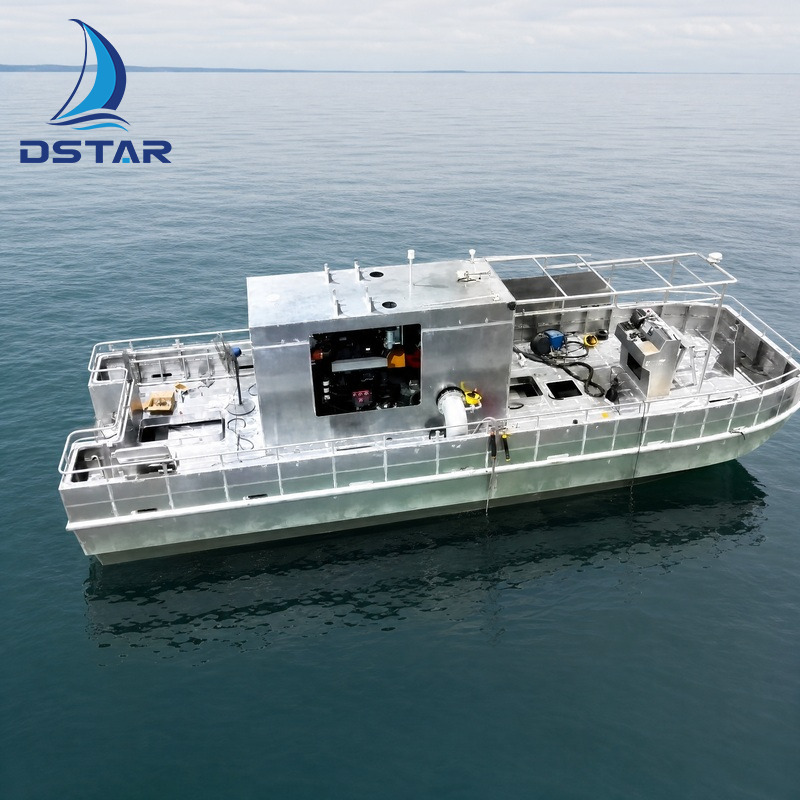
A realistic profile also protects the owner in service. If the certified limits are written around a genuine duty cycle, the crew can work inside them without constantly operating at the edge of what the certificate allows.
State the flag the vessel will fly and the specific waters she will work in, including any river, estuary, bay or island group, and the maximum distance from a safe haven that the operation requires. Vague answers such as "coastal" or "inshore" cause the authority to ask again, and the second answer is rarely more generous than the first.
Where the vessel will be registered, provide the registration or proposed registration details, the official number if one has been issued, and the ownership documentation. If the vessel is second-hand, include the previous certification or registration history, because a gap in that history is a question the surveyor will want answered.
Name the people who will hold responsibility, and be specific about who does what. The application normally needs the owner or operating company, the master or skipper, and the person responsible for maintenance and for keeping the records that the certification depends on.
Provide evidence of competence for the crew that will actually run the vessel, matched to the area and the duty. Where a Manning document or a crew training matrix exists, include it. Where the vessel will be operated by a small team with overlapping roles, say so plainly and show how the overlap is covered during absence, because a certification that assumes a role is always filled by one person is fragile in real operation.
The drawing set is usually the largest single item in the file. Expect to provide the general arrangement drawing, the profile and deck plans, the structural arrangement and sections, the shell expansion, and the tank plan. Where a load line assignment is involved, the load line drawings and the conditions of assignment documentation are needed. Where tonnage measurement is required, the tonnage documentation has to be prepared and submitted through the correct channel for the flag.
Drawings must be the as-built drawings, not an early concept set. A common and expensive mistake is to submit a design-stage general arrangement that no longer matches the boat, and then have the surveyor find a deck layout, a bulkhead position or a tank that does not exist on the vessel. Mark revisions clearly and keep a drawing register so that the authority and the surveyor are looking at the same revision.
For a vessel based on a series hull, the yard will typically supply the standard drawing package and the owner supplies the project-specific arrangement drawings. For a one-off build, such as a custom steel passenger vessel or a bespoke workboat, the drawing set is project-specific and is agreed before construction starts, which is also the cheapest time to make changes.
This is the section owners most often underestimate, because the evidence is generated long before the application is written and cannot be recreated afterwards. Collect it during the build.
Material certificates for the hull and structural plating, including grade and traceability where the authority requires it.
Welding procedure specifications and the associated procedure qualification records.
Welder qualification records for the welders who worked on the structure.
Welding inspection records, including visual inspection and any non-destructive testing that the specification or the authority requires.
Coating specification and application records, including surface preparation standard and dry film thickness readings.
Records of any structural repairs or modifications made during build or after delivery, with the drawings that describe them.
A yard that builds to a documented procedure produces this file as a by-product of the work. A yard that does not will struggle to produce it later, and an owner who buys a boat without it will be asked for the missing evidence at the worst possible moment.
Where the applicable requirements call for it, stability information is prepared and submitted, and where Section 12B applies a stability manual is normally required as well. The submission typically includes the loading conditions that the vessel is expected to operate in, the assumptions behind them, the lightship particulars and the results of the inclining or rolling test used to establish them.
Two practical points save time. First, the lightship condition must be weighed or established properly before the stability work is finalised, because a later change of engines, ballast or deck equipment invalidates the numbers. Second, the loading conditions should reflect the real duty described in the operational profile, including the worst realistic combination of fuel, cargo, crew and gear, rather than a single tidy departure condition. Where the vessel may be modified after certification, note the modification in the manual and plan for the stability file to be revisited.
The equipment section is where a generic quotation gets exposed. Each item needs to be shown as fitted, located and appropriate for the area of operation, with the supporting documentation behind it.
Fire: the fire-fighting arrangement drawing, extinguisher and fixed system specifications, locations, and the servicing or acceptance records.
Life-saving: the life-saving appliance schedule, the number and type of appliances against the certified number of persons on board, and the servicing records for inflatable equipment and hydrostatic releases.
Navigation and communications: the equipment schedule with model references, the installation records, and where applicable the radio licence documentation for the flag.
Machinery: engine and gearbox specifications, fuel system drawings, exhaust arrangement, cooling system details and the sea trial data that shows the installation performs as intended.
Electrical: the electrical load schedule, single line diagram, battery and charging arrangement, and the records showing that the installation is protected and correctly rated.
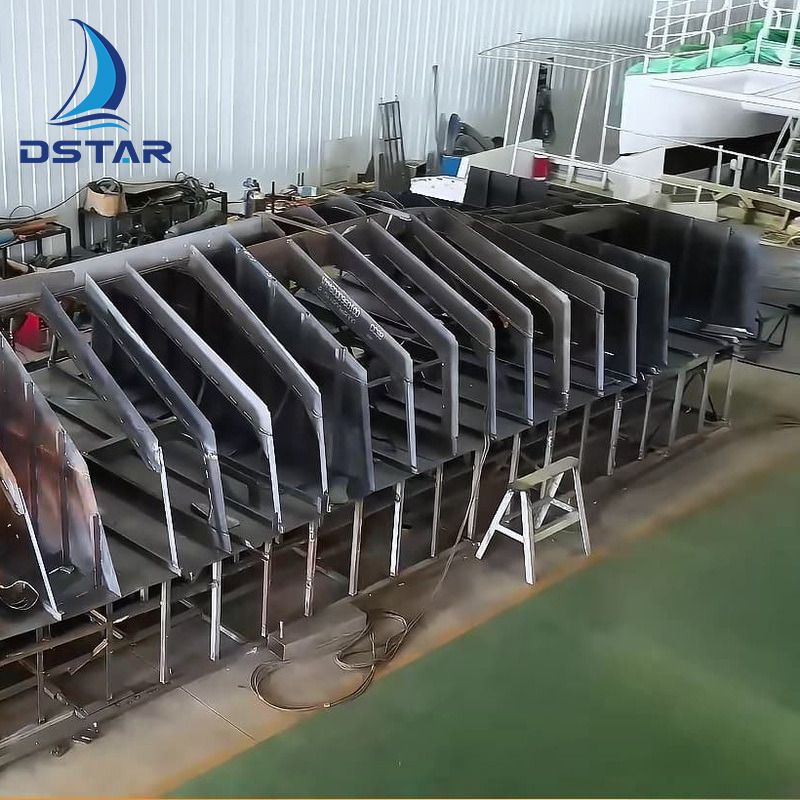
Photographs taken during construction are worth including here. A surveyor who can see the tank, the framing, the cable runs and the machinery installation before they were closed up will ask fewer questions later, and the owner keeps a record of what is inside the hull for the rest of the vessel's life.
Prepare a risk assessment that matches the duty described earlier, covering the hazards that are specific to this operation rather than a generic list. Falling overboard during line handling, manual handling of heavy gear on an open deck, slipping on a wet working surface, fire in the machinery space, loss of propulsion close to a structure, and working at anchor overnight are the kind of items that belong in a workboat assessment.
The operating limits should be written down and they should be honest. Maximum persons, maximum deck load, maximum wind and sea state for the intended duty, restrictions on night operation, restrictions on towing, and the conditions under which the vessel should not leave harbour. The operations and maintenance manual then sets out how the vessel is run and maintained: the daily and weekly checks, the servicing intervals, the spares carried, the drills, and the records the operator is expected to keep. A manual that describes the vessel as built is far more useful than one copied from a different model.
Include the evidence that the vessel performs as the documentation says it does. That normally means the dock and sea trial records, the machinery running hours at delivery, the steering and controls test, the bilge and fire pump test, the electrical insulation and continuity results, and the tank calibration or sounding data.
Speed and endurance figures should be presented with the loading condition under which they were measured. A speed recorded light is not evidence of performance loaded, and an authority reading a bare number will ask what it was measured against. Presenting the condition alongside the figure avoids that circular exchange. For a barge or a flat-deck working platform, such as the 11.5m aluminium work barge we build for harbour and cargo work, the trial data also covers deck loading and the stability of the working platform.
The survey will produce findings, and some of them will be non-conformities. Each one needs a written close-out: what was found, what was done, when it was done, who did it, and the evidence that it is now correct. Photographs, updated drawings, revised procedures, test results and purchase invoices all serve as evidence, depending on the finding.
It is worth being systematic about this, because a certificate is not issued until the non-conformities are closed. Keep a single register, number each finding, and file the close-out evidence against the number. When the authority reviews the file, a clean register with evidence attached is the difference between a short review and a series of follow-up questions.
Certification is not a one-off event, and the owner should plan for the ongoing obligation from the start. Periodic surveys, intermediate inspections and the renewal cycle come with their own record requirements: the maintenance log, the equipment servicing certificates, the stability file, any modification history, and the record of defects and their repair.
Two habits make the ongoing cycle straightforward. Keep the vessel documentation in one place, physically or digitally, and keep it current rather than reconstructing it before each survey. Record every modification, however small, with the drawing or description that goes with it, because an undocumented change to structure, machinery or equipment is the most common reason a survey is delayed.
Owners who plan the file this way usually find the first application and the following surveys take a predictable amount of time rather than an unpredictable one. If you are at the specification stage and want to understand what the yard can supply as part of the build, the Dookyu Crown Marine team can walk through the drawing, welding and test records that are produced as standard on a project.
This checklist is a practical guide to what owners and masters usually need to assemble. It is not a complete statutory list, it is not legal advice, and it does not describe every item any authority may ask for. The requirements that actually apply to a given vessel depend on the flag, the area of operation, the construction and the programme requirements of the certifying authority selected. Treat the list as a starting point, confirm the final scope with that authority, and build the file around their answers rather than around an article.


