

Views: 0 Author: Site Editor Publish Time: 2026-10-28 Origin: Site


Most export enquiries reach the same point of confusion within a few emails: the buyer asks whether the boat is "USCG certified", and the honest answer is that there is no such certificate for a recreational boat. What the U.S. actually requires is a self-certification and a hull identification number — and the paperwork depends on a code that the buyer, not the builder, usually has to hold.
U.S. federal rules split along the same line as Europe's: recreational craft and inspected passenger vessels are handled by completely different systems.
Recreational boats fall under 33 CFR Part 181 (manufacturer requirements) and 33 CFR Part 183 (safety standards). Commercial passenger vessels fall under inspection by the U.S. Coast Guard, under 46 U.S.C. 3301 and 46 CFR Subchapter T for small passenger vessels under 100 gross tons.
The definition is wider than most people expect. Under 33 CFR 181.3, a "boat" includes a vessel used primarily for non-commercial purposes, one leased or rented for non-commercial use, and also an uninspected passenger vessel carrying no more than six passengers. So a small charter or water-taxi craft does not escape the recreational rules just because it carries paying passengers.
A Manufacturer Identification Code — the first three characters of every U.S. hull number — is issued by the Coast Guard. For boats built outside the United States, 33 CFR 181.31 requires the U.S. importer to apply for it, listing the importer's American address together with the name, address, type and size of each foreign manufacturer.
That single sentence reshapes an export project. If your American customer has never imported a boat before, they do not yet have a MIC, and the hull cannot be numbered until they do. Beginning the application before the build is finished costs nothing; discovering it at the port costs weeks.
Under 33 CFR 181.25 the hull identification number is exactly twelve characters, with no spaces, hyphens or slashes:
characters 1–3 are the MIC (or the importer's designation); characters 4–8 are a serial number in which the letters I, O and Q may not be used; characters 9–10 are the month of certification as a letter (A for January through L for December) followed by the last digit of the year; characters 11–12 are the model year.
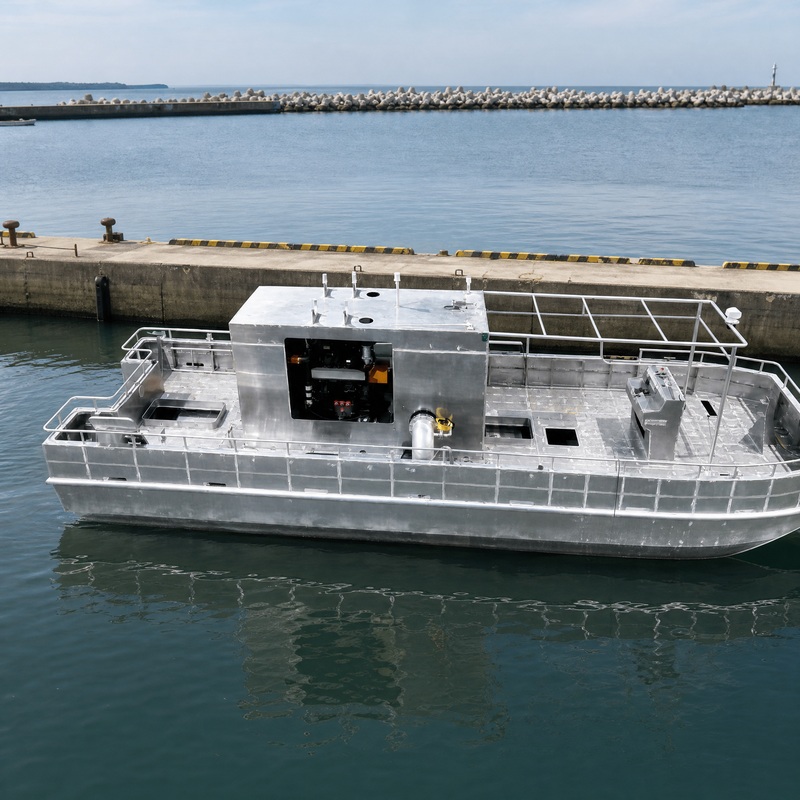
Two identical numbers must be affixed — a primary one on the starboard outboard side of the transom within two inches of the top, and a duplicate in an unexposed interior location — in characters at least a quarter of an inch high, permanently attached, and on no removable part. On a catamaran or pontoon boat the primary number goes on the aft crossbeam within one foot of the starboard hull attachment.
No boat may be imported for sale without a compliance label affixed before it leaves the place of manufacture or before import. 33 CFR 181.15 sets out what it must carry: the manufacturer's name and address, and the statement that the boat complies with U.S. Coast Guard safety standards in effect on the date of certification. If the boat is rated for maximum horsepower, the high-performance warning statement is also required.

Part 181 does not apply to a boat intended solely for export and labelled accordingly. That exemption is real, but it covers boats leaving the United States — it is not a route around the rules for a boat being imported into the American market for sale.
Three answers shorten the process considerably: whether the vessel will be used privately, chartered, or inspected commercially; who the U.S. importer of record will be and whether they already hold a MIC; and the intended model year, since that fixes the last two digits of the hull number.
For our aluminium work barges, custom steel passenger vessels and the rest of the aluminium and steel range, we state the applicable route in the quotation rather than after the deposit — because a recreational craft and an inspected passenger vessel are not the same project, and they should not be quoted as if they were. If you are weighing a U.S. delivery, send us the intended use and the importer's status and we will set out what the file has to contain. More background on classification and compliance sits in our news section, and the full range starts from the home page.


